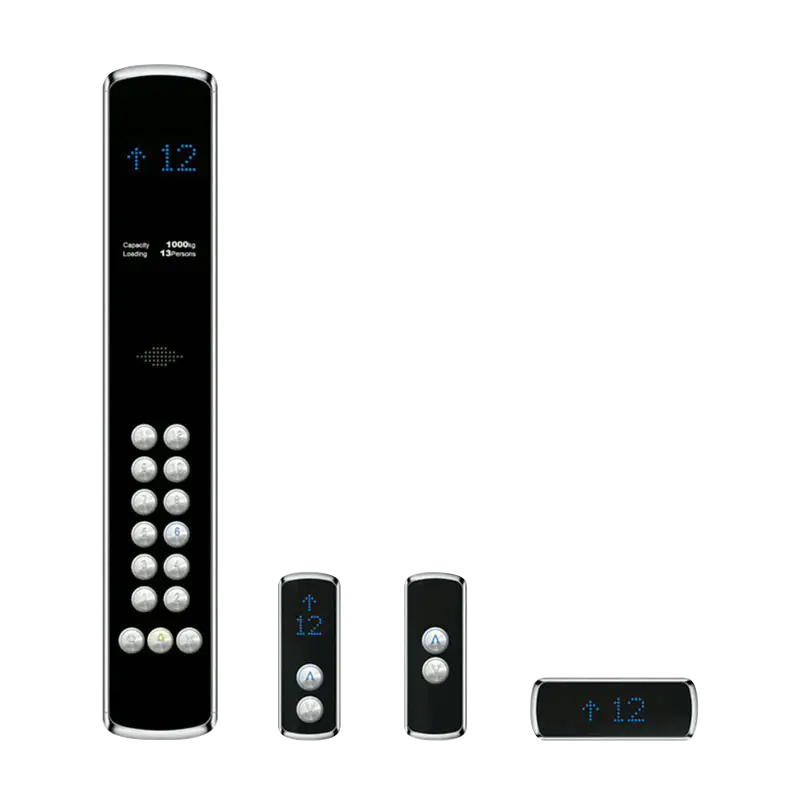
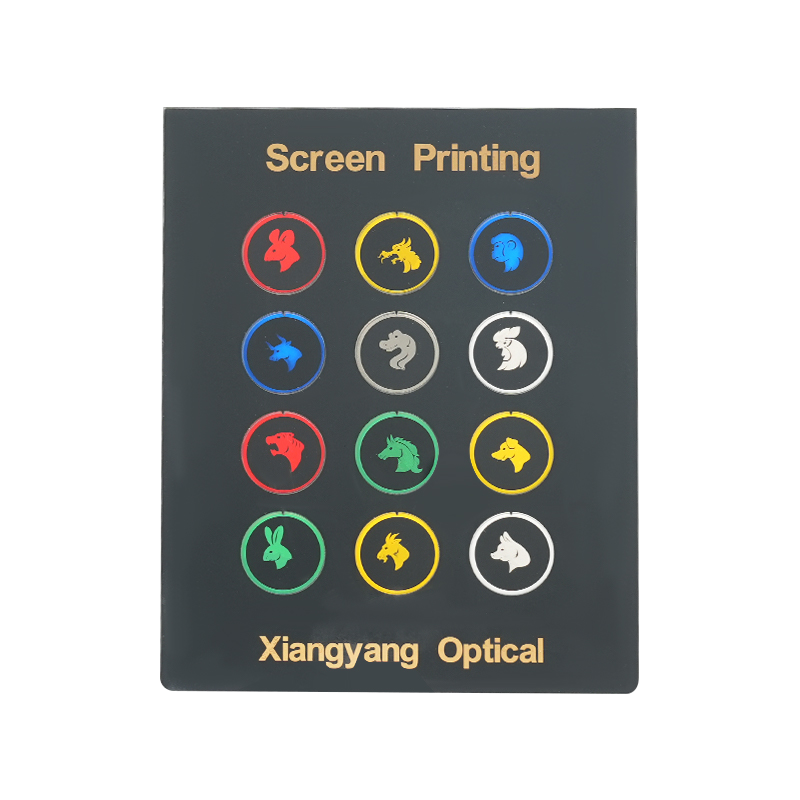
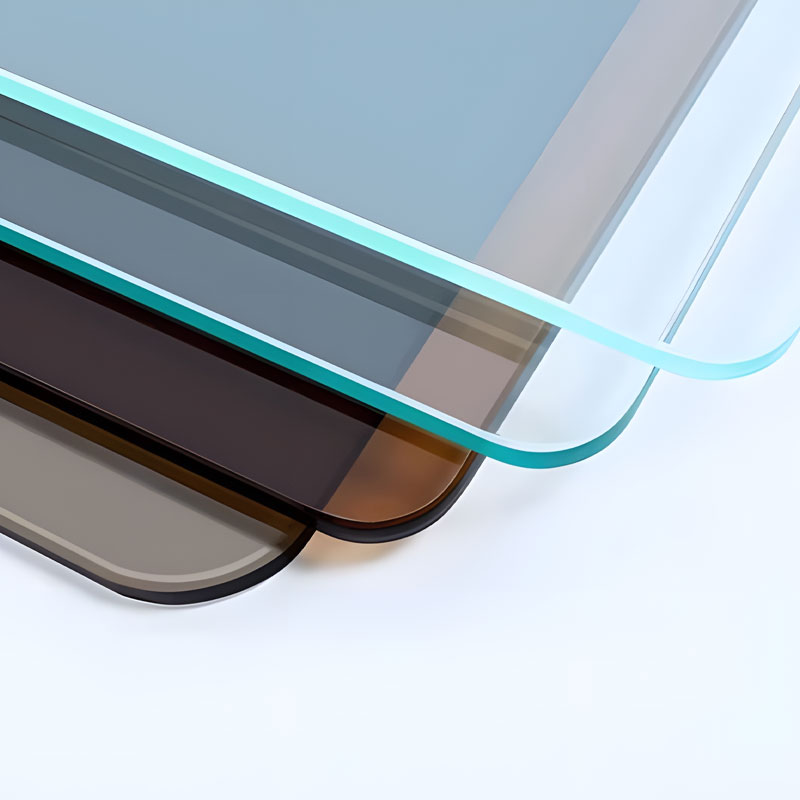
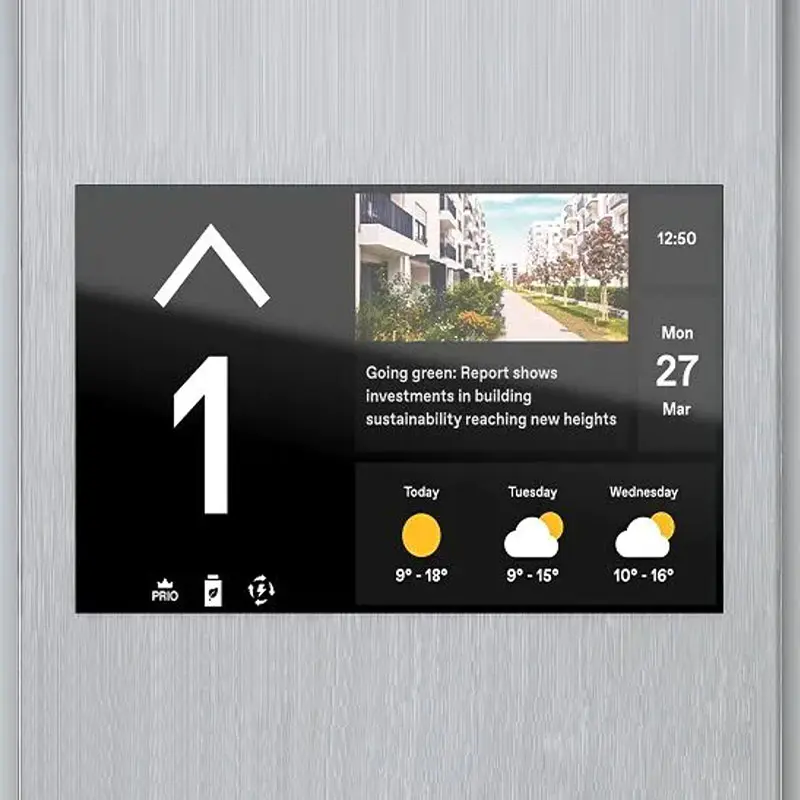
Yes — screen-printed glass panels are safe for elevator use, provided they are manufactured to the correct specifications. Tempered screen-printed glass meets international safety standards and is widely used in elevator cabins, control panels, and call buttons around the world. The combination of silk-screen printing technology and thermal tempering produces panels that are visually refined, structurally strong, and built to withstand the mechanical and environmental demands of daily elevator operation. This article explains how these panels are made safe, what standards they must meet, and how customized elevator glass panels can serve both functional and design purposes.
Screen-printed glass used in elevators is not standard flat glass. It goes through a carefully controlled manufacturing process that transforms it into a high-performance material. The two most critical steps are the silk-screen printing process and the tempering furnace treatment that follows.
The Silk-Screen Printing Process
In silk-screen printing for glass, ceramic-based inks are applied through a fine mesh screen onto the glass surface. These inks are then permanently fused into the glass during the tempering process at temperatures exceeding 620°C. The result is a color layer that cannot be scratched off or degraded by cleaning agents — unlike painted or film-coated glass. This durability is essential in elevator environments, where surfaces are touched, cleaned, and exposed to friction thousands of times per year.
Thermal Tempering for Structural Safety
After printing, the glass undergoes tempering — a rapid heating and cooling cycle that creates compressive stress on the surface and tensile stress in the core. Tempered glass is approximately 4–5 times stronger than standard annealed glass of the same thickness. Critically for safety, when tempered glass breaks, it fractures into small, rounded granules rather than sharp shards, significantly reducing the risk of injury. This characteristic makes it the required material in elevator applications under most building and safety codes.
Safety Standards and Certifications That Apply
Elevator components are subject to strict regulatory requirements in every major market. Screen-printed glass panels used in elevator interiors must comply with relevant safety and quality frameworks:
- ISO 9001: Quality management system standard ensuring consistent manufacturing processes and product traceability
- China Compulsory Certification (3C / CCC): Mandatory for glass products used in consumer and commercial applications in China
- EN 12150 (Europe): Thermally toughened soda lime silicate safety glass standard
- ASTM C1048 (USA): Standard specification for heat-treated flat glass
- GB 15763.2 (China): National standard for tempered glass used in building and architectural applications
Manufacturers supplying panels to major elevator brands are typically required to demonstrate compliance with both product-level and system-level quality certifications before approval.
Key property comparison: standard glass vs. tempered screen-printed glass for elevator use
| Property |
Standard Annealed Glass |
Tempered Screen-Printed Glass |
| Flexural Strength |
~45 MPa |
~170–200 MPa |
| Breakage Pattern |
Large sharp shards |
Small rounded granules |
| Thermal Resistance |
Up to ~40°C differential |
Up to ~200°C differential |
| Surface Print Durability |
Not applicable |
Ceramic ink fused — permanent |
| Elevator Code Compliance |
Not suitable |
Compliant |
Where Screen-Printed Glass Panels Are Used in Elevators
Modern elevators integrate glass panels in multiple functional and decorative positions. Each location has specific requirements for print clarity, thickness, and surface treatment:
- Control panel face plates: The front surface of the elevator's interior button panel — requires precise aperture registration for button alignment and high-resolution graphics
- Outbound call panels (landing panels): The call button assembly mounted on each floor — must withstand continuous finger contact and resist vandalism
- Cabin wall cladding: Decorative elevator glass panels used as interior wall surfaces, delivering visual character to the cabin environment
- Display surrounds and indicator panels: Framing for floor indicators and direction displays, often with backlit graphics enabled by translucent ink zones
- Door panels and sidelights: Used in observation elevators and glass-door cabin designs
Elevator Printed Glass Panel Design: Aesthetic and Functional Possibilities
One of the most compelling advantages of screen-printed glass is its design flexibility. Unlike metal or plastic panels, glass can carry rich color, gradient effects, and fine graphic detail while remaining cleanable, reflective, and premium in appearance. Elevator printed glass panel design can be adapted to match any interior theme — from clinical minimalism to elaborate architectural motifs.
Design Options Available Through Screen Printing
- Solid opaque backgrounds in any RAL or Pantone-matched color
- Translucent zones that allow backlighting to pass through for illuminated indicators
- Gradient and halftone patterns for subtle tonal transitions
- Metallic ink effects (gold, silver, bronze) for luxury interiors
- Multi-layer printing for complex graphics with fine line detail
- Frosted or matte texture effects applied via ceramic ink
The minimum line width achievable in quality screen printing is approximately 0.3–0.5mm, enabling detailed logos, fine borders, and precise button aperture cutouts that remain sharp and consistent across production runs.
Customized Elevator Glass Panels: The OEM and ODM Process
Customized elevator glass panels are typically produced through either OEM (Original Equipment Manufacturer) or ODM (Original Design Manufacturer) arrangements. Understanding the difference helps elevator brands and building contractors select the right manufacturing relationship.
OEM vs ODM: key differences for elevator glass panel procurement
| Factor |
OEM |
ODM |
| Design ownership |
Customer provides design |
Manufacturer designs to spec |
| Typical lead time |
10–20 days after artwork approval |
15–30 days including design phase |
| Minimum order |
Typically 50–200 pcs per SKU |
Varies by complexity |
| Best suited for |
Established brands with in-house design |
New market entrants or rapid development |
A typical custom order progresses through: artwork file submission, screen production, print trial, tempering, dimensional inspection, and packaging for shipment. Quality manufacturers conduct 100% visual inspection plus sampling dimensional checks against customer-supplied drawings before any batch is released.
Decorative Elevator Glass Panels: Elevating Interior Design
Decorative elevator glass panels have moved beyond purely functional applications. In premium commercial buildings, hotels, and residential towers, the elevator cabin is now considered an extension of the building's interior design language. Glass panels allow architects and interior designers to introduce color, pattern, and branded identity into a space that passengers experience multiple times per day.
- Full-height cabin wall panels with architectural patterns or nature-inspired graphics
- Ceiling panels with backlit translucent designs that simulate light diffusion
- Floor indicator surrounds with gold or silver metallic ink frames
- Corporate identity integration — brand colors and logos fused permanently into the glass surface
Because the ceramic ink is fused at high temperature, decorative panels require no protective film or laminate over the printed surface. They can be wiped clean with standard glass cleaners without risk of fading or surface damage — a practical advantage in high-traffic environments.
Quality Inspection and Testing in Production
Reliable manufacturers of elevator screen-printed glass panels implement multi-stage inspection throughout production. The following checkpoints are standard in quality-controlled facilities:
- Incoming glass inspection: Raw glass substrate checked for bubbles, inclusions, and dimensional tolerance before printing
- Screen and ink verification: Mesh tension, ink viscosity, and color matching confirmed before each production run
- Post-print visual inspection: Panels checked for pinholes, smearing, color deviation, and registration accuracy
- Post-tempering fragmentation test: Samples tested per applicable standard — EN 12150 requires a minimum of 40 fragments per 50x50mm area
- Dimensional and flatness check: Critical for control panel applications where mechanical button assembly must align precisely
- Final packing inspection: Edge protection, interleaving, and crate integrity verified before shipment
Advanced testing equipment sourced from Germany, Japan, and Switzerland is used by leading manufacturers to ensure measurement accuracy beyond what standard visual inspection alone can achieve.
About Nantong Xiangyang Optical Element Co., Ltd.
Nantong Xiangyang Optical Element Co., Ltd. was founded in 1996 and is a high-tech enterprise in Jiangsu Province, covering an area of 10,000 square meters. The company is a professional OEM elevator screen-printed glass panel supplier and ODM elevator screen-printed glass panels factory in China, specializing in the production and processing of colored optical glass, colorless optical glass, and flat glass screen printing and tempering. Its products comply with ISO 9001-2000 quality standards and hold 3C quality system certification.
The company operates two focused divisions. The Optical Components Production Division specializes in color filters and light filters for optical glass across ultraviolet, visible, near-infrared, and infrared light regions, serving optical instruments, medical instruments, biochemical instruments, electronics, aviation, military, and scientific research applications. The Flat Glass Products Division focuses on glass deep processing, silk-screen printing, and tempering, equipped with automated production lines and advanced inspection instruments from Germany, Japan, and Switzerland. Products cover elevators (control boxes, outbound calls, buttons), washing machines, refrigerators, household appliances, instruments, and high-intelligence electronic switches — available in over a hundred specifications and trusted by leading global brands in the industry.
Frequently Asked Questions
Q1: Is tempered screen-printed glass strong enough for high-traffic elevator use?
Yes. Tempered glass is approximately 4–5 times stronger than standard glass of the same thickness. Elevator control and call panels are typically produced in 3–6mm tempered glass, which is more than sufficient for the mechanical contact and vibration loads encountered in daily elevator operation.
Q2: Will the printed design on elevator glass panels fade or wear off over time?
No. Ceramic inks used in glass screen printing are fused into the surface during the tempering process at temperatures above 620°C. The result is a permanent bond that resists abrasion, UV exposure, and chemical cleaning agents. Unlike film or vinyl prints, ceramic ink surface integrity remains essentially unchanged over 10+ years of use.
Q3: Can elevator glass panels be fully customized in shape, size, and design?
Yes. Customized elevator glass panels can be produced in virtually any rectangular dimension, with CNC-cut apertures for buttons and displays, custom edge profiles, and any color or graphic design matched to brand specifications. Both OEM (customer-supplied artwork) and ODM (manufacturer-developed design) options are available.
Q4: What certifications should I look for when sourcing elevator screen-printed glass panels?
Look for ISO 9001 quality management certification and 3C (China Compulsory Certification) as baseline requirements. For export markets, confirm compliance with EN 12150 (Europe) or ASTM C1048 (USA) for tempered glass. Reputable manufacturers will provide certification documents upon request.
Q5: How do decorative elevator glass panels differ from standard control panels?
Decorative elevator glass panels are used as interior wall cladding or design elements rather than functional button panels. They typically involve larger panel dimensions, more complex artwork, and effects such as backlighting zones, metallic inks, or architectural patterns. Both types use the same tempered screen-printed glass construction but differ in application, thickness specification, and mounting method.




 English
 Español