Quick Answer: What Are Elevator Screen-Printed Glass Panels
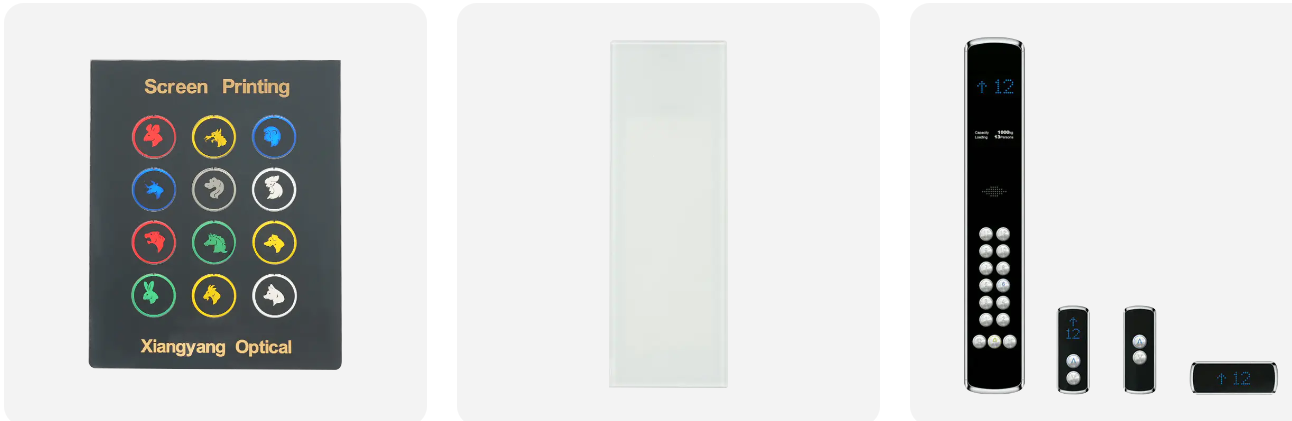
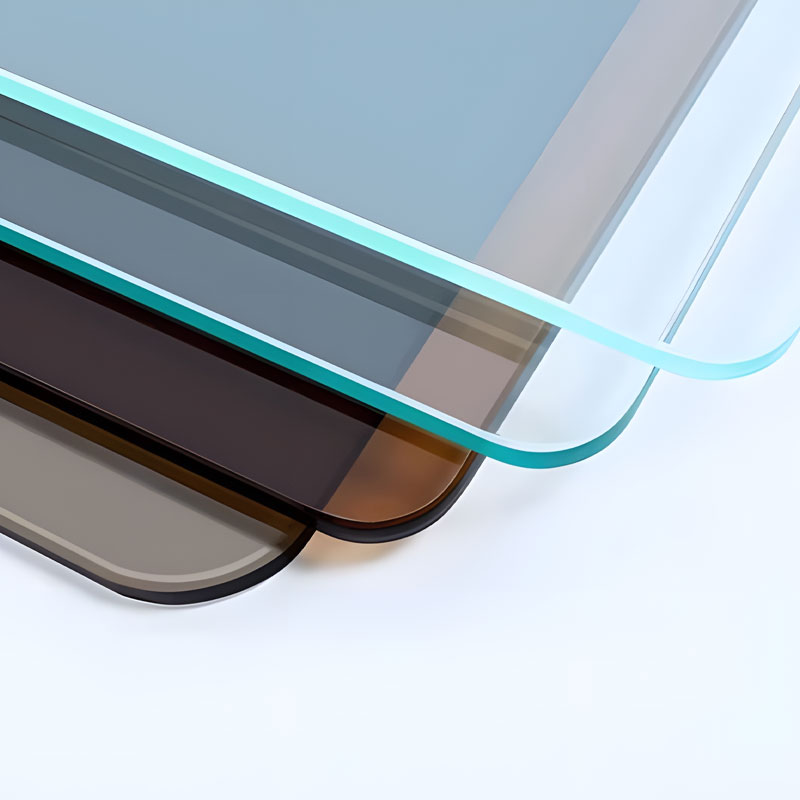
Elevator screen-printed glass panels are tempered glass components with floor numbers, symbols, and logos printed directly onto the surface using a fine mesh screen printing process. They serve three main jobs inside the cabin: identifying floor buttons and call stations, adding a decorative finish to the interior, and providing a layer of impact safety since the base material is tempered rather than ordinary annealed glass. Because the printed layer is fired onto the glass at high temperature, the markings stay legible and resist fading far longer than a painted or adhesive label would.
These panels have largely replaced separate plastic or metal button covers in modern cabins, since printing, structural safety, and visual style can all be built into a single piece of glass. The sections below cover how the panels are made, how thick they typically run, where they are installed, and how they compare with related glass finishing methods such as ceramic frit printing.
How Elevator Screen-Printed Glass Panels Are Manufactured
The quality of any elevator screen printed glass panel depends heavily on process control at each stage of production, from substrate preparation through to final testing.
Cut the tempered glass substrate to the required panel dimensions, then polish the edges smooth to remove any sharp points.
Clean the glass surface thoroughly so it is free of oil residue and dust, since any contamination can weaken how well the print layer adheres.
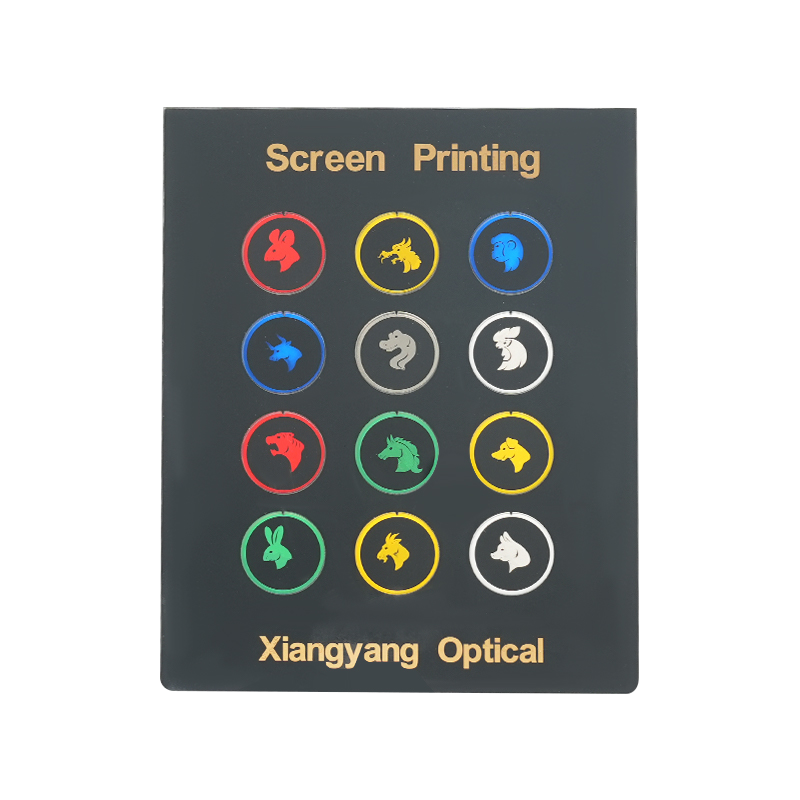
Apply the screen print pattern, including floor numbers, door open and close symbols, alarm icons, and brand logos, through a fine mesh screen with print accuracy generally held within about 0.1mm.
Cure the printed glass in a high temperature oven, typically somewhere between 120 and 180 degrees Celsius, so the ink bonds tightly into the glass surface rather than sitting as a loose coating.
Temper the finished glass through a controlled heating and rapid cooling cycle, which raises impact resistance and changes the break pattern into small, less sharp fragments.
Test finished panels for wear resistance, resistance to common cleaning agents, and light transmission before the panels are packed for shipment.
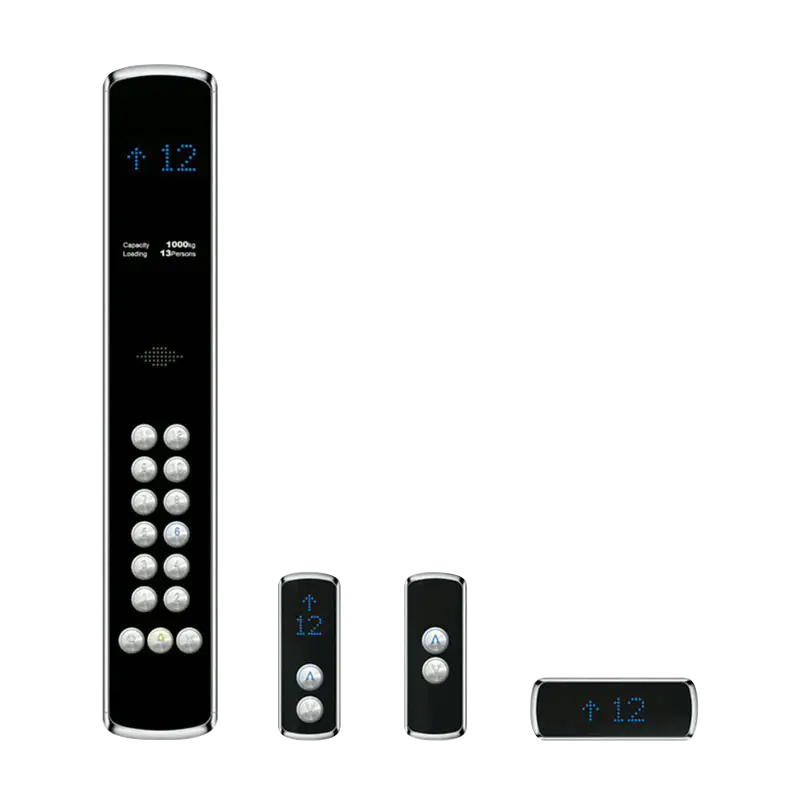
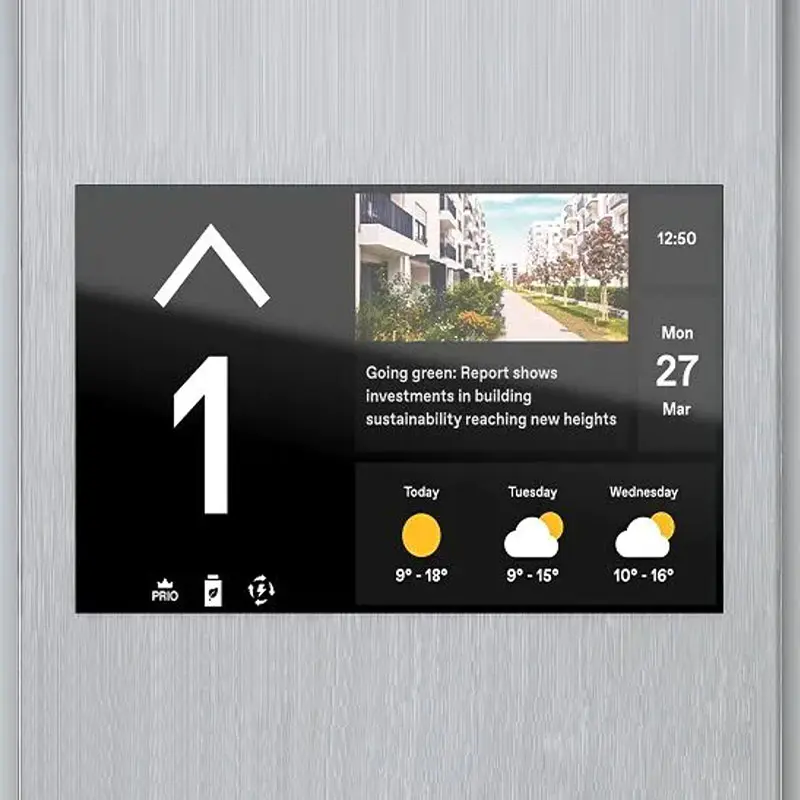
Precise alignment matters most on button panels, where printed markings need to sit exactly over the touch sensor underneath so a passenger's finger lands on the correct floor number every time.
Elevator Screen-Printed Glass Panel Diagram: Layers Explained
A cross section of a typical panel shows three distinct layers working together, which is a useful reference when comparing an elevator glass panel from one supplier against another.
Simplified cross section of a screen-printed elevator glass panel, showing the tempered glass base, the ink layer, and the cured protective finish.
What Each Layer Does
Tempered glass substrate, the structural base that gives the panel its impact resistance and safe breakage pattern.
Screen-printed ink layer, which carries the floor numbers, symbols, and logos in the chosen color and finish.
Cured surface finish, formed once the printed ink is baked at high temperature so it resists wear, scratching, and common cleaning agents.
Core Characteristics of Elevator Screen-Printed Glass Panels
Three characteristics tend to matter most to architects, elevator manufacturers, and facility managers choosing panels for a new or refurbished cabin.
Core characteristics of screen-printed elevator glass panels and the practical benefit each one provides.
Characteristic
What It Means
Practical Benefit
Safety and Durability
Tempered base glass with a non-sharp breakage pattern
Lowers the chance of injury if a panel is ever damaged
Functional Integration
Floor numbers, symbols, and logos printed directly on the surface
Combines identification and interaction in one component
Visual Adaptability
Supports monochrome, multi-color, gradient, and matte finishes
Matches a wide range of cabin interior styles
Because the print layer sits directly on tempered glass rather than a separate plastic overlay, decorative elevator glass tends to keep its clarity and color even after years of repeated cleaning and daily handling.
Screen-Printed Glass vs Ceramic Frit Glass vs Standard Painted Glass
Buyers researching ceramic printed glass often want to know how it stacks up against standard screen printing and simple painted finishes. The radar comparison below looks at five practical measures across all three options.
Relative comparison of screen-printed tempered glass, ceramic frit tempered glass, and standard painted glass across five practical measures.
Typical use case and notable trait for each glass finishing method.
Glass Type
Typical Use Case
Notable Trait
Screen-Printed Tempered Glass
Button panels, indicator displays
Sharp print definition with wide color and finish options
Ceramic Frit Tempered Glass
Cabin wall panels, ceiling panels
Strong resistance to fading with consistent long-term clarity
Standard Painted Glass
Basic decorative trim in non-safety areas
Lower wear resistance compared with fired-on tempered options
A silk screen glass panel and a ceramic frit panel both start from a similar tempering process, but ceramic frit ink is typically fired at a higher temperature and fuses more deeply into the glass surface, which is why it tends to hold its finish especially well on large decorative wall sections.
Choosing the Right Glass Thickness for Elevator Panels
Thickness selection depends mainly on where the panel sits inside the cabin and how much structural load or daily handling it needs to withstand.
Typical thickness ranges used for different elevator glass panel applications.
Panel Type
Typical Thickness
Common Application
Button / Indicator Panel
4 mm
Floor call buttons, indicator displays
Ceiling Panel
5 mm
Decorative ceiling inserts
Decorative Wall Panel
6 mm
General cabin wall decoration
Structural Cabin Wall Panel
8 mm
Load-bearing decorative wall sections
Heavy Traffic Commercial Cabin
10 mm
High traffic commercial and freight elevators
Typical Panel Thickness by Application
Typical thickness used for each panel type, shown as general reference rather than a fixed rule for every cabin design.
Where Screen-Printed Glass Panels Are Installed Inside the Elevator Cabin
An elevator cabin glass package usually covers more than just the button panel. The chart below shows a typical distribution of where printed glass panels are used across the cabin.
Typical share of screen-printed glass panel installations by cabin location, shown for general reference.
Wall and ceiling panels tend to use larger sheets with broader ceramic or screen-printed patterns, while button and indicator panels rely more heavily on precise, small-scale printing accuracy since markings need to align exactly with the controls underneath.
Durability and Expected Lifespan of Elevator Glass Panels
Because the printed layer is fired onto tempered glass rather than applied as a surface coating, well made panels tend to hold their finish for a long service period under normal indoor use and routine cleaning.
Illustrative pattern of surface finish retention over years of normal indoor use, shown for general reference only.
The gentle downward slope in the chart above reflects gradual surface wear from cleaning and daily contact rather than any sudden failure, which is consistent with how a properly cured print layer typically behaves over an extended service period.
Customization Options for Elevator Screen-Printed Glass Panels
Most projects call for panels tailored to a specific interior design rather than a single standard look, which is where working with a custom elevator screen printed glass manufacturer becomes useful.
Color options ranging from monochrome and metallic tones to multi-color gradient effects.
Surface finishes including gloss, matte, and textured effects to suit modern minimalist or business luxury cabin themes.
Pattern and logo printing, including brand marks, decorative motifs, and custom floor number styles.
Panel sizing and edge shaping to match specific cabin dimensions and mounting hardware.
OEM and ODM production paths, where a supplier works from a buyer's design brief or develops a panel design in house.
Working directly with an OEM elevator glass panels supplier generally makes it easier to align printing color, panel thickness, and hole or cutout placement in a single coordinated production run, rather than sourcing each element separately.
Maintenance and Cleaning Tips for Elevator Glass Panels
Routine care helps keep printed graphics crisp and the glass surface free of buildup that can dull its appearance over time.
Wipe panels with a soft, non-abrasive cloth rather than rough scouring pads that could scuff the printed surface.
Use mild glass cleaning solutions and avoid harsh solvents that are not intended for glass or printed surfaces.
Clean fingerprints and smudges around button areas regularly, since oils can build up faster in high touch zones.
Inspect panels periodically for chips or cracks along the edges, which is where impact damage typically starts.
Avoid placing adhesive stickers or tape directly on the printed area, since removal can sometimes lift surface finish over time.
About the Manufacturer Behind These Elevator Glass Panels
Nantong Xiangyang Optical Element Co., Ltd was founded in 1996 and operates from a facility covering about 10,000 square meters in Jiangsu Province. The company specializes in colored optical glass, colorless optical glass, and flat glass screen printing and tempering, organized across two main production groups.
The Optical Components Division focuses on color filters and light filters for colored and colorless optical glass, covering ultraviolet, visible, near-infrared, and infrared light ranges, and supports fields such as optical instruments, medical devices, and analytical instruments. The Flat Glass Products Division handles the deep processing of glass, silk screen printing, and tempering, running automated screen printing lines and tempering furnaces alongside inspection equipment sourced from several established international suppliers.
Today the product range covers elevator components such as control boxes, outbound call panels, and buttons, along with printed glass parts for washing machines, refrigerators, household appliances, instruments, and high intelligence electronic switches, spanning more than a hundred specifications. As a ceramic frit printed elevator glass supplier and custom silk screen glass factory, the company works with elevator manufacturers and appliance brands to develop panels suited to each customer's design and functional requirements.
Frequently Asked Questions About Elevator Screen-Printed Glass Panels
Q1: What is screen-printed glassIt is glass with a pattern, text, or logo applied through a fine mesh screen and then cured at high temperature so the ink bonds into the surface rather than sitting as a loose coating.
Q2: What is ceramic frit glassCeramic frit glass uses a ceramic based ink that is fired at a higher temperature during tempering, fusing more deeply into the glass and giving strong resistance to fading on large decorative panels.
Q3: Is screen-printed glass durableWhen the print layer is properly cured and the base glass is tempered, the finish typically resists scratching, fading, and everyday cleaning far better than a painted or sticker based surface.
Q4: Can screen-printed glass be temperedYes, printing is generally applied before the final tempering cycle so the ink cures and the glass gains its impact resistant properties in the same production sequence.
Q5: What glass is used in elevatorsElevator cabins commonly use tempered glass for button panels, indicator displays, and decorative wall or ceiling sections, often combined with screen printing or ceramic frit finishes.
Q6: Is tempered glass required for elevatorsTempered glass is widely preferred for elevator interiors because of its higher impact resistance and safer breakage pattern compared with ordinary annealed glass.
Q7: How thick is elevator glassThickness generally ranges from around 4mm for button and indicator panels up to 8 to 10mm for structural wall sections or heavy traffic commercial cabins.
Q8: Can elevator glass be customizedYes, panels can typically be customized in color, finish, pattern, logo, thickness, and cutout placement to match a specific cabin design or brand requirement.
Q9: What is the lifespan of elevator glassProperly cured and tempered panels are generally expected to hold their printed finish well over many years of normal indoor use and routine cleaning.
Q10: How should elevator glass panels be cleanedUse a soft cloth with a mild glass cleaner, avoid abrasive pads or harsh solvents, and pay extra attention to fingerprint buildup around button areas.




 English
 Español