Home · News · Industry News · The Complete Guide to Selective Absorption Glass Filters
The Complete Guide to Selective Absorption Glass Filters
Author: AdminDate: Jun 17,2026
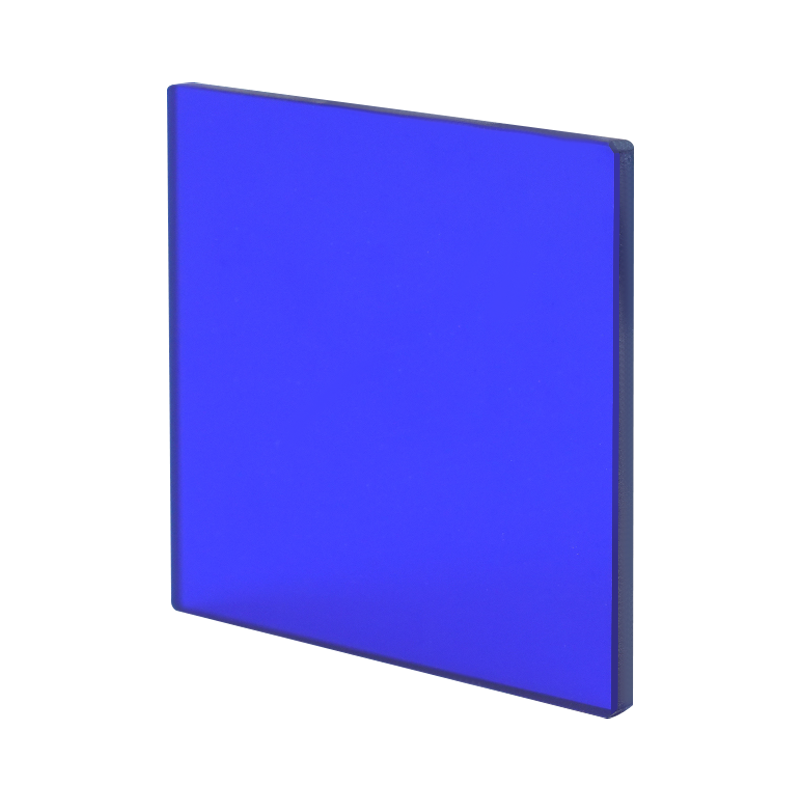
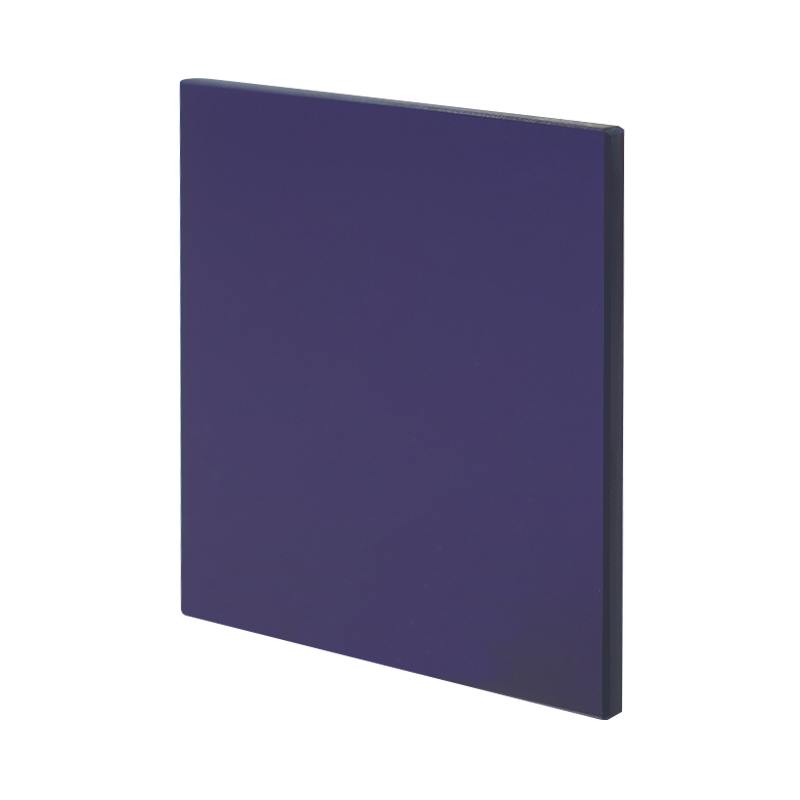
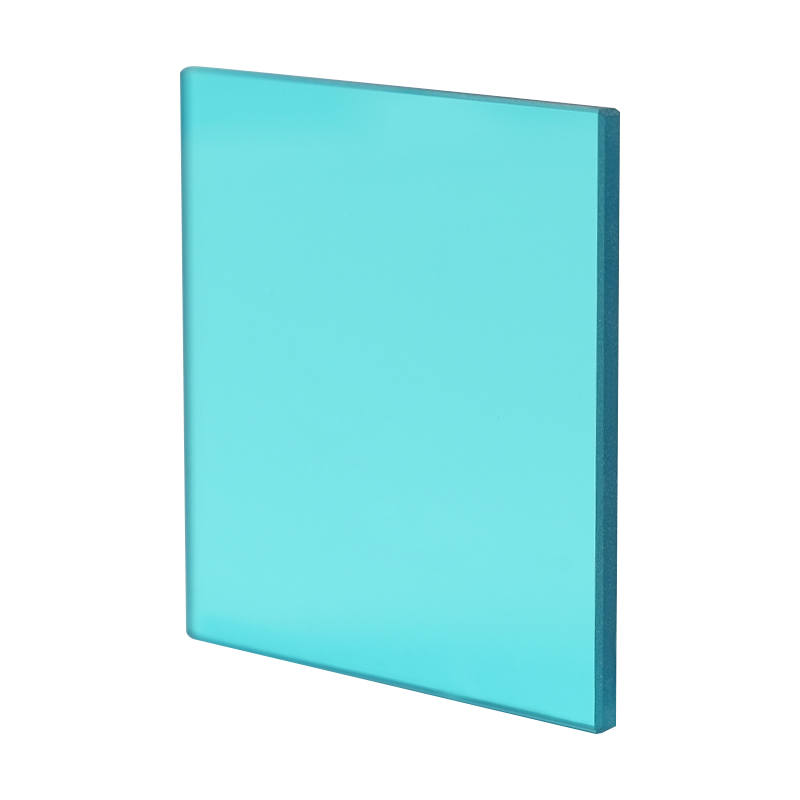
A selective absorption glass filter is an optical component made from colored optical glass that transmits a chosen band of wavelengths while absorbing the rest of the spectrum through the intrinsic ion content of the glass itself, rather than through a thin-film coating. The direct answer for buyers comparing options: if your application needs stable, scratch-resistant, angle-independent wavelength control across ultraviolet, visible, or near-infrared light, an absorption-type colored glass filter is typically the more durable and cost-stable choice compared with thin-film interference filters, especially in spectroscopy, fluorescence detection, and machine vision systems that operate in variable lighting or harsh environments. This guide explains how these filters work, how they are manufactured, how to read their optical density specifications, and how to select the right filter for analytical, medical, or industrial use cases.
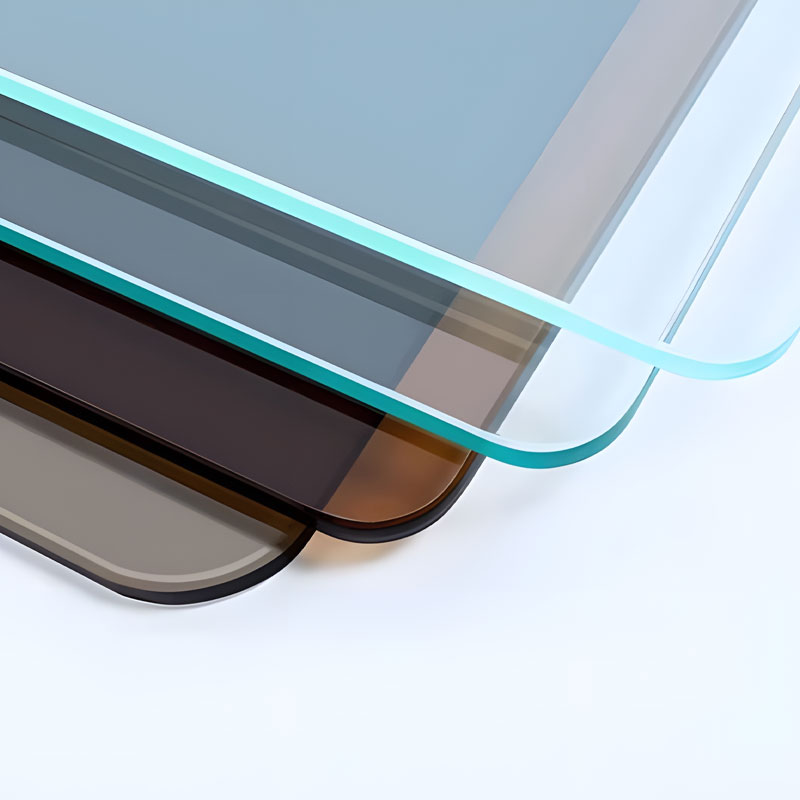
A selective absorption glass filter is a piece of colored optical glass engineered so that specific metal or rare-earth ions distributed throughout the glass matrix absorb particular wavelengths of light while allowing others to pass through. Unlike reflective or interference filters that rely on multilayer coatings deposited on a substrate, an absorption glass filter achieves its spectral selectivity from the bulk material composition. This means the filtering effect is present through the entire thickness of the glass, not just at a surface layer, which gives the filter excellent long-term stability even under repeated handling, cleaning, or thermal cycling.
These filters are typically classified by the region of the spectrum they control: ultraviolet-blocking filters, visible bandpass or long-pass filters, and near-infrared absorbing filters. Because the absorption mechanism is angle-independent, the transmission curve of the filter does not shift noticeably when light strikes it off-axis, which is a meaningful advantage over interference coatings in optical systems where the angle of incidence varies, such as in imaging lenses or wide-aperture spectrometers.
Core Material Categories
Colored optical glass filters using copper, cobalt, or iron oxide doping for visible and near-infrared control
Colorless optical glass with rare-earth doping for narrow ultraviolet cutoff behavior
Neutral density absorption glass used for uniform attenuation across a broad band
Heat-absorbing glass formulated to remove infrared energy from a projected or imaged beam
How Selective Absorption Filters Work
The working principle of an optical absorption filter is based on electronic transitions within the ions embedded in the glass network. When a photon of a particular energy strikes an absorbing ion, the ion's electrons absorb that energy and move to a higher energy state, which removes that specific wavelength from the transmitted beam. Wavelengths that do not match an available electronic transition pass through largely unaffected. The result is a transmission curve with distinct absorption bands and transmission windows that are determined almost entirely by the chemical composition of the glass melt.
Because this process happens throughout the glass volume, the filtering behavior scales with thickness. A thicker piece of the same colored glass type will generally show a steeper cutoff slope and a lower transmission in the absorption band, while a thinner piece will transmit more light overall but with a less sharp edge. This thickness dependency is one reason manufacturers specify both the glass type code and the thickness when quoting a filter's spectral curve.
The chart below illustrates a representative transmission curve for a long-pass colored glass filter, showing how transmission percentage changes across the ultraviolet, visible, and near-infrared regions. This type of curve is the standard way optical engineers communicate filter performance, and it allows a design engineer to quickly identify the cutoff wavelength and the usable transmission band for a given application.
As the curve shows, the filter blocks nearly all light below roughly 430 nanometers, transitions sharply through a cut-on region, and then maintains stable high transmission through the visible and near-infrared range. The steepness of that transition zone is often the single most important specification engineers check, because a steeper slope means cleaner separation between the blocked and passed wavelength regions, which is critical for fluorescence excitation and emission separation.
Understanding Optical Density in Absorption Filters
Optical density, often abbreviated OD, is a logarithmic measure of how strongly a filter blocks a given wavelength. An optical density of 1 means the filter transmits roughly 10 percent of incident light at that wavelength, an OD of 2 corresponds to about 1 percent transmission, OD of 3 to about 0.1 percent, and so on. Because the scale is logarithmic, even small increases in OD represent large reductions in transmitted light, which is why spectroscopy and fluorescence applications often specify a minimum OD value rather than a transmission percentage when describing blocking performance in the rejection band.
For most analytical instruments, the blocking region of a colored glass filter needs an OD of at least 3 to 4 to prevent stray excitation light from overwhelming a weak emission signal. Thicker glass generally produces higher OD in the absorption band, but at the cost of slightly reduced transmission in the pass band, so filter selection always involves balancing blocking strength against usable signal throughput.
Approximate relationship between optical density and percent transmission
Optical Density (OD)
Approximate Transmission
Typical Use Case
OD 1
10%
Mild glare or intensity reduction
OD 2
1%
General machine vision contrast control
OD 3
0.1%
Standard fluorescence blocking
OD 4
0.01%
High-sensitivity spectroscopy
OD 5
0.001%
Research-grade signal isolation
How Optical Glass Filters Are Made
Manufacturing an optical glass filter begins with melting a glass batch that contains precise quantities of coloring agents such as copper oxide, cobalt oxide, iron oxide, or rare-earth compounds depending on the target spectral curve. The melt is held at controlled temperature and stirred to ensure the absorbing ions are evenly distributed, since uneven distribution would create visible striations or inconsistent filtering across the surface of the finished part. Once the melt reaches homogeneity, it is cast or pressed into blocks or rough blanks for cooling under a controlled annealing schedule that relieves internal stress.
After annealing, the rough glass blanks move through a sequence of precision processing steps: rough grinding to bring the blank to approximate dimensions, fine grinding to remove subsurface damage, polishing to achieve the required surface flatness and finish, and edging or chamfering to the final outer dimension. Each piece is then inspected for parallelism, surface quality, and spectral performance before coating, if an anti-reflective coating is requested, or before final cleaning and packaging for parts left uncoated.
Typical Production Sequence
Raw material batching and glass melting with coloring ions
Controlled annealing to relieve internal stress
Rough cutting and slicing into workable blanks
Fine grinding and double-side polishing
Dimensional edging, chamfering, or custom shaping
Spectral testing, dimensional inspection, and packaging
Quality control at each stage matters because optical glass is sensitive to scratches, digs, and thickness variation. A precision optical glass filter intended for spectroscopy or scientific instrumentation typically requires tighter flatness and parallelism tolerances than a filter used for general illumination or display applications, so manufacturers usually maintain separate process lines or inspection criteria for high-precision versus standard-grade output.
Comparing Absorption Filters to Interference Filters
Optical engineers often need to decide between an absorption-type colored glass filter and a thin-film interference filter, and the right choice depends on the specific performance priorities of the system. Absorption filters generally offer better angular stability, simpler handling, and more consistent long-term performance, while interference filters can achieve narrower bandpass widths and steeper transition edges at a single design wavelength. The radar chart below compares these two filter technologies across five practical criteria that matter most to instrument designers.
As the chart illustrates, absorption glass filters score higher on angular stability, long-term durability, handling tolerance, and cost stability, which explains why they remain the preferred choice for field instruments, industrial sensors, and machine vision systems that operate outside a tightly controlled lab environment. Interference filters retain an advantage in applications that demand extremely narrow bandpass widths or very steep transition edges at one exact wavelength, such as laser line isolation, but that advantage often comes with greater sensitivity to mounting angle and environmental drift over time.
Applications Across Industries
Selective absorption glass filters appear across a wide span of technical fields because nearly every optical measurement system needs some form of wavelength control. In analytical chemistry, absorption filter for spectroscopy applications isolate excitation and emission bands in fluorometers and colorimeters. In biomedical instrumentation, these filters separate diagnostic signal wavelengths from background illumination in blood analyzers and imaging systems. In industrial automation, machine vision optical filters improve contrast and reduce glare so that cameras can read barcodes, inspect surfaces, or sort components more reliably under variable factory lighting.
The bar chart below shows the relative share of demand across major application categories based on common industry usage patterns, giving a practical sense of where this filter technology is concentrated and why manufacturers prioritize certain glass types and thickness ranges in their standard catalogs.
Spectroscopy and analytical instrumentation represent the largest single application segment, which aligns with the fact that nearly every UV-Vis spectrophotometer, fluorometer, and colorimeter relies on at least one absorption-type filter for stray light rejection or reference calibration. Machine vision and fluorescence detection follow closely, reflecting the growth of automated optical inspection in manufacturing and the expanding use of fluorescence-based assays in laboratory diagnostics.
Filters Used in Spectroscopy and Fluorescence Systems
Spectroscopy instruments depend on precise wavelength isolation to generate accurate readings, and fluorescence optical filters in particular must reject excitation light extremely well while still passing a weak emission signal. A typical fluorescence setup pairs an excitation filter, which narrows the light source to the band that excites the sample, with an emission filter, which blocks the reflected excitation wavelength so that only the longer-wavelength emitted light reaches the detector. Absorption glass excels in the emission filter role because its blocking performance does not degrade with the angle of the collected light, which is often scattered across a range of angles as it leaves the sample.
The line chart below tracks how detector signal-to-noise ratio improves as filter optical density increases, based on typical fluorescence measurement behavior. This relationship explains why instrument designers are often willing to accept a small reduction in pass-band transmission in exchange for a meaningful jump in blocking strength, since background noise reduction usually has a larger net effect on measurement quality than a few percentage points of lost signal.
This pattern of accelerating returns at higher optical density values is one reason that emission filters used in sensitive fluorescence assays are frequently specified at OD 4 or higher, even though the absolute transmission loss in the pass band at that thickness is small. For routine colorimetric or general-purpose spectroscopy work, an OD 2 to OD 3 filter is often sufficient and allows for a thinner, more cost-stable component.
How to Choose the Right Optical Filter
Selecting the correct wavelength absorption filter starts with clearly defining the target wavelength range that must be passed and the wavelength range that must be blocked, since these two requirements together determine the glass type and thickness needed. The next consideration is the required optical density in the blocking region, followed by the physical constraints of the optical system, including the available diameter or aperture, thickness limits, and whether an anti-reflective coating is needed to reduce surface losses in a high-precision setup.
Selection Checklist
Define the exact cut-on or cut-off wavelength needed for the application
Specify the minimum optical density required in the blocking band
Confirm the required transmission percentage in the pass band
Check mechanical tolerances such as diameter, thickness, and flatness
Decide whether anti-reflective coating or edge blackening is necessary
Consider environmental factors such as operating temperature and humidity exposure
Working with a manufacturer that can support custom optical glass filters is particularly valuable when a standard catalog part does not exactly match the wavelength or dimensional requirement of a project. A capable OEM optical filter manufacturer will typically request the target transmission curve, the physical dimensions, and the intended mounting method, then propose either an existing glass type that already meets the curve or a custom melt formulation for high-volume programs that justify the additional development work.
Common filter selection criteria by application type
Application
Priority Spec
Typical Thickness Range
Fluorescence detection
High OD in blocking band
1mm to 3mm
Machine vision
Consistent transmission, durability
1mm to 2mm
UV-Vis spectroscopy
Sharp cutoff slope
1mm to 5mm
Heat absorption
Broad infrared absorption
2mm to 6mm
Why Manufacturing Quality and Sourcing Matter
The performance of a colored glass filter depends heavily on the consistency of the glass melt and the precision of the polishing and edging process, which is why sourcing from an established optical filter factory China teams often rely on requires careful evaluation of quality systems and testing capability. A facility that maintains documented process controls and recognized quality certifications is more likely to deliver batch-to-batch spectral consistency, which matters greatly for OEM programs where every unit in a production run must meet the same transmission specification.
An experienced industrial optical filter supplier typically operates dedicated equipment for colored optical glass processing separate from general flat glass work, since the polishing tolerances and inspection criteria for optical-grade parts are considerably tighter than for decorative or architectural glass. Buyers evaluating a potential optical absorption filter supplier should ask about in-house spectral testing capability, since the ability to verify the actual transmission curve of a sample part before full production is one of the clearest indicators of manufacturing discipline.
Nantong Xiangyang Optical Element Co., Ltd., founded in 1996 and based in Jiangsu Province, China, operates as a selective absorption glass filters manufacturer with a dedicated Optical Components Production Division covering more than a hundred types of colored and colorless optical glass spanning the ultraviolet, visible, near-infrared, and infrared regions. The facility's product quality follows ISO9001 quality management standards along with 3C quality system certification, and its processing equipment supports both standard catalog filter production and custom optical glass filters for OEM and ODM programs across optical instruments, medical devices, biochemical analyzers, electronics, aviation, and scientific research applications.
Frequently Asked Questions
Q1: What is an absorption glass filter?
It is an optical glass component that uses ions distributed through the glass to absorb specific wavelengths while transmitting others, providing stable spectral control without a thin-film coating.
Q2: How do selective absorption filters work?
Doping ions in the glass absorb photons at specific energies through electronic transitions, removing those wavelengths from the transmitted beam while letting other wavelengths pass.
Q3: What is optical density in filters?
Optical density is a logarithmic measure of blocking strength; each increase of one OD unit reduces transmission by a factor of ten in the blocking region.
Q4: How are optical glass filters made?
They are produced by melting doped glass batches, annealing to relieve stress, then grinding, polishing, and edging the blanks to precise optical dimensions.
Q5: What filters are used in spectroscopy?
UV-Vis spectroscopy and fluorescence systems commonly use absorption glass filters for stray light rejection, reference calibration, and excitation or emission band isolation.
Q6: How do I choose an optical filter?
Define the target pass and block wavelength ranges, the required optical density, and the mechanical dimensions, then match these to an available glass type and thickness.
Q7: What wavelengths do absorption filters block?
Depending on the glass formulation, absorption filters can block ultraviolet, specific visible bands, or near-infrared and infrared wavelengths while passing the remaining spectrum.
Q8: Can absorption filters be used in machine vision?
Yes, their angle-independent performance and durability make them well suited for improving contrast and reducing glare in industrial camera and inspection systems.




 English
 Español