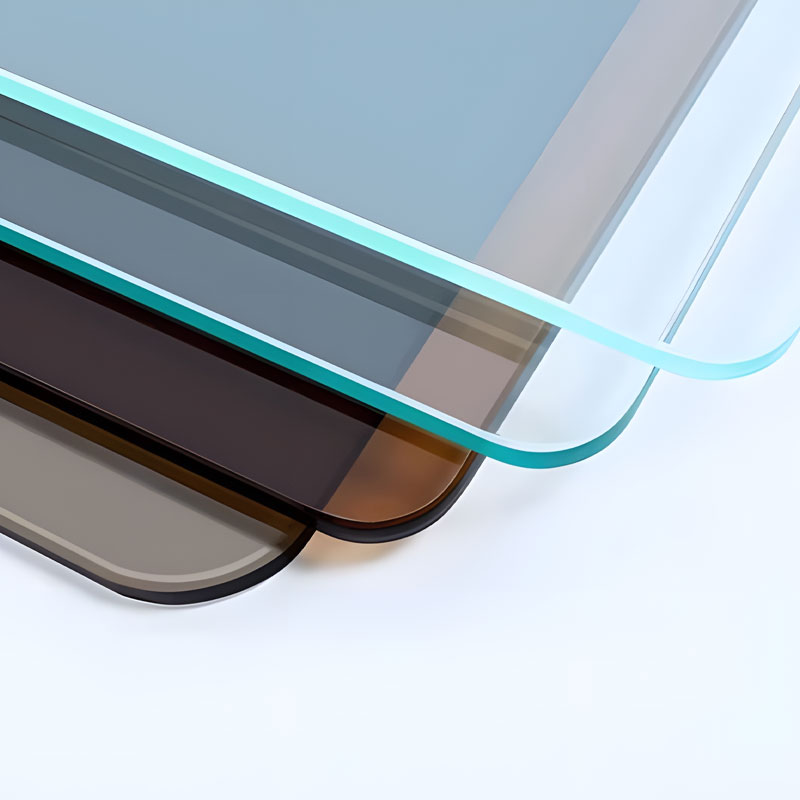
Yes — selective absorption glass filters can block UV light, and many are specifically engineered to do so with high efficiency. The UV-blocking capability of a selective absorption filter depends on the absorbing dopants or colorants introduced into the glass matrix during manufacturing. Certain glass compositions — particularly those doped with cerium oxide, iron oxide, or specific rare earth compounds — absorb UV radiation across the 200–400 nm range while maintaining high transmission in the visible spectrum. Other formulations are designed to block UV and infrared simultaneously. This article explains the mechanism, quantifies the performance levels achievable, and identifies the applications where these filters are deployed.
How Selective Absorption Glass Filters Work
Selective absorption glass filters operate through a fundamentally different mechanism than reflective or interference-based optical filters. Rather than reflecting unwanted wavelengths at a surface coating, absorption filters contain dopants — metallic oxides, rare earth ions, or organic colorants fused directly into the glass substrate — that convert absorbed photon energy into heat within the glass matrix itself.
When a photon of UV radiation passes into the glass, it excites electrons in the absorbing species to higher energy states. This energy is then released as thermal vibration rather than as re-emitted light, effectively removing those wavelengths from the transmitted beam. Because the absorbing species is homogeneously distributed through the bulk glass, the filtering effect is stable, angle-independent, and immune to the delamination or coating degradation that can affect surface-coated filters over time.
Key Absorbing Dopants and Their UV Blocking Characteristics
| Dopant / Colorant |
Primary Absorption Band |
UV Blocking Effectiveness |
Visible Transmission Impact |
| Cerium oxide (CeO₂) |
280–400 nm |
Excellent (>99% at 320 nm) |
Minimal — near-colorless |
| Iron oxide (Fe₂O₃/FeO) |
300–450 nm + NIR |
Good (UV + partial blue) |
Yellow-green tint at higher loadings |
| Neodymium oxide (Nd₂O₃) |
520–590 nm + UV |
Moderate UV absorption |
Purple tint, yellow-green blocking |
| Didymium (Nd + Pr mix) |
589 nm + broad UV |
Good UV, excellent sodium D-line blocking |
Pinkish-purple tint |
| Copper oxide (CuO) |
600–900 nm (blue-green pass) |
Limited UV blocking alone |
Blue-green transmission |
| UV-absorbing organic frit |
200–380 nm |
Very high (OD 3–5 achievable) |
Near-colorless in visible range |
Table 1: Common dopants used in selective absorption glass filters, their primary absorption bands, UV blocking effectiveness, and effect on visible transmission.
Cerium oxide is the most widely used UV-absorbing dopant in precision optical glass because it provides broadband UV absorption from 280–400 nm with minimal impact on visible light transmission. At a concentration of 1–3 wt% CeO₂ in a standard borosilicate matrix, the filter achieves optical density (OD) values of 3.0–4.0 in the UVB range, corresponding to transmission levels below 0.01% at those wavelengths.
UV Transmission Spectrum: What the Data Shows
The spectral performance of UV-blocking selective absorption glass filters is best understood through transmission curves. The chart below illustrates the typical transmission profiles of cerium-doped UV-blocking glass compared to standard soda-lime glass and fused silica (which transmits UV freely).
Figure 1: Typical transmission curves for cerium-doped UV-blocking selective absorption glass, standard soda-lime glass, and UV-transmitting fused silica. Cerium glass achieves near-zero transmission below 380 nm with high visible-range transmission.
Colored Selective Absorption Glass Optical Filters: Types and Spectral Functions
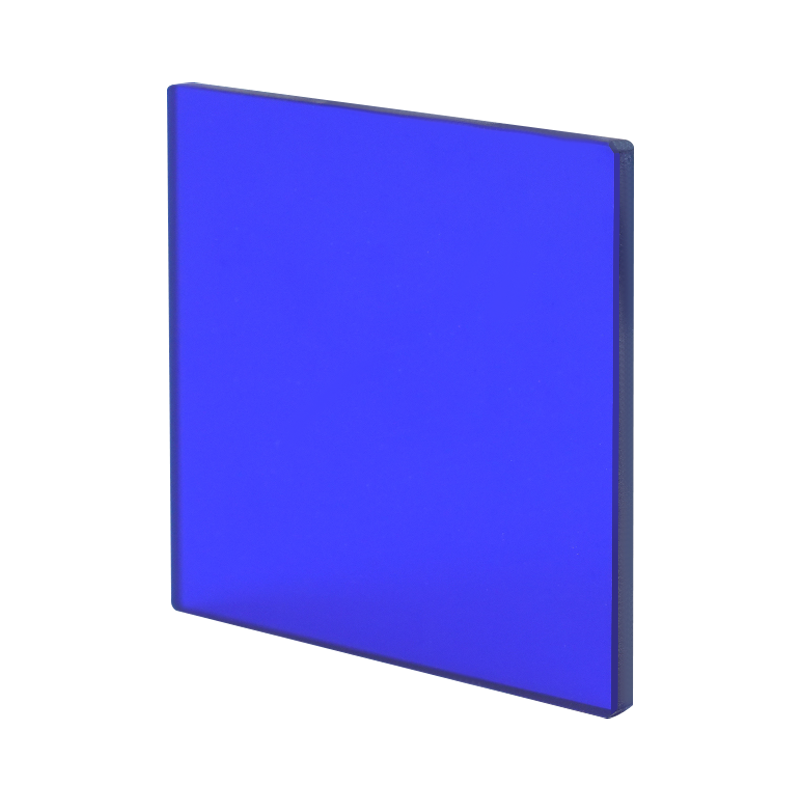
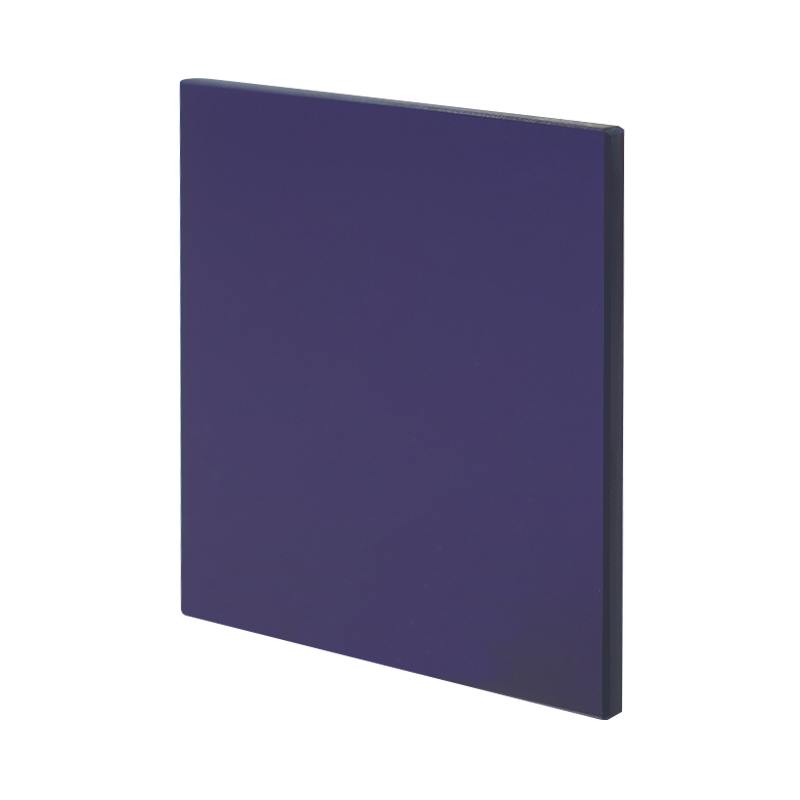
Colored selective absorption glass optical filters extend the functionality beyond UV blocking to encompass precise spectral shaping across the visible and near-infrared range. Color glass filters are classified by their transmission function into several standard categories, each with defined applications in scientific instrumentation, industrial imaging, and photonic systems.
Longpass Filters
Longpass filters transmit wavelengths above a defined cut-on wavelength and block all shorter wavelengths. UV-blocking longpass filters with cut-on wavelengths at 380–420 nm are the most common application for UV rejection in optical instruments, photography, and museum lighting. A well-specified longpass at 400 nm achieves OD ≥ 4.0 below 380 nm and transmits more than 85% above 420 nm.
Shortpass Filters
Shortpass filters transmit below a defined cut-off wavelength and block longer wavelengths. UV-passing shortpass filters (cut-off at 350–400 nm) are used when UV transmission is specifically required while visible light must be blocked — as in UV fluorescence excitation, forensic illumination, and certain photolithographic applications.
Bandpass Filters
Bandpass filters isolate a defined wavelength range by combining the absorption characteristics of two or more glass types. A UV bandpass filter, for example, is constructed by stacking a UV-transmitting shortpass glass with an opaque visible-blocking glass to produce a narrow transmission window in the 300–380 nm range. These are widely used in fluorescence microscopy, spectroscopy, and phototherapy equipment.
Neutral Density Filters
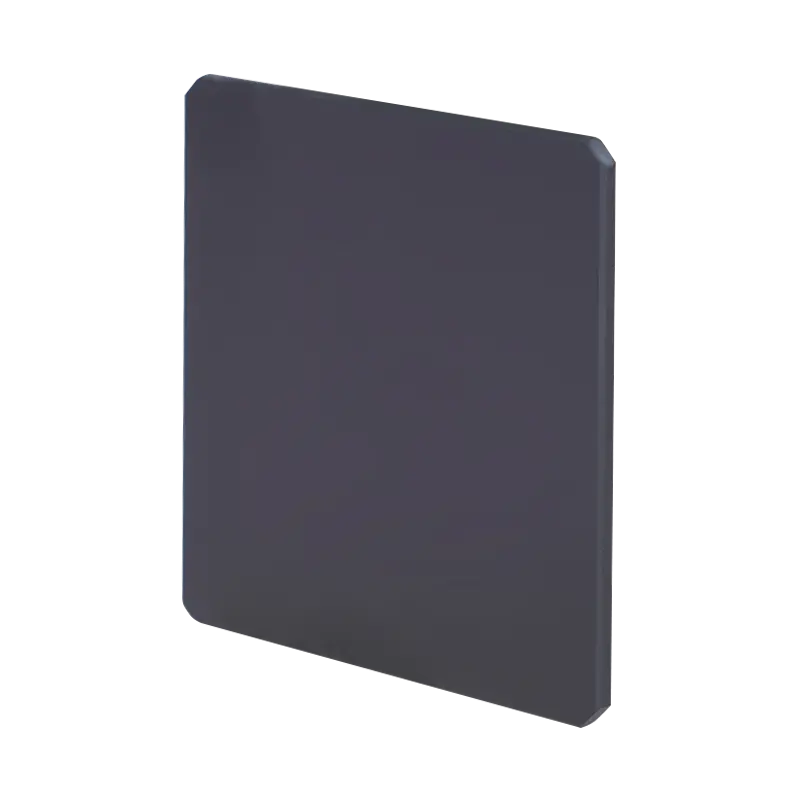
Neutral density absorption filters reduce overall light intensity uniformly across a broad spectral range. Gray glass ND filters typically provide flat attenuation from 400–700 nm with consistent optical density values. ND filters incorporating UV-absorbing dopants simultaneously attenuate visible light and block UV — a combined function useful in camera systems and laser safety applications.
Key Applications Requiring UV-Blocking Selective Absorption Glass Filters
The demand for UV-blocking selective absorption glass filters spans a wide range of industries where UV radiation causes document degradation, detector damage, photochemical reactions, or human health risk. The following application categories drive the majority of specification and procurement activity.
- Museum and archival lighting: Artworks, textiles, and historic documents are highly sensitive to UV radiation above 300 nm. Display case glazing incorporating cerium-doped UV-blocking glass reduces UV irradiance at exhibit surfaces by more than 99%, extending the effective display life of irreplaceable materials by decades.
- Scientific imaging and microscopy: CCD and CMOS image sensors are inherently UV-sensitive. Without a UV-blocking filter in the optical path, UV photons register as spurious signal, reducing image sharpness and color accuracy. UV-blocking absorption glass filters are standard components in camera lenses, scientific cameras, and microscope objective back apertures.
- Fluorescence excitation and emission separation: In fluorescence microscopy and flow cytometry, precise UV bandpass filters select specific excitation wavelengths while longpass absorption filters block excitation light from the detection channel. Absorption glass provides the high optical density (>OD 5 in blocking bands) required to prevent excitation light bleedthrough in sensitive fluorescence systems.
- Laser safety and laser beam management: Laser safety eyewear and beam-blocking windows for UV lasers (excimer lasers at 193, 248, 308 nm; Nd:YAG third and fourth harmonics at 355, 266 nm) require high-OD absorption glass capable of sustained exposure without degradation. Absorption-based blocking is preferred over thin-film coatings for this application due to resistance to laser-induced coating damage.
- Phototherapy and UV irradiation systems: Medical and cosmetic UV phototherapy devices require filters that define precise UV delivery windows (UVA, UVB) while blocking shorter-wavelength UVC and visible light that is not part of the therapeutic dose. Absorption glass filters allow this spectral shaping with the durability required for medical device service life.
- Architectural glazing: Laminated glass incorporating UV-absorbing interlayers or surface-fused UV-blocking glass layers protects interior furnishings, flooring, and occupants from UV exposure while maintaining high visible light transmittance. Automotive windshields typically achieve UV transmission below 0.1% through similar absorption glass technology.
Selective Absorption vs. Interference Filters: Performance Comparison
Selective absorption glass filters are frequently compared to thin-film interference (dichroic) filters in optical system design. Understanding the performance trade-offs between these technologies allows engineers and procurement specialists to select the appropriate solution for each application.
| Parameter |
Selective Absorption Glass |
Thin-Film Interference Filter |
| Blocking mechanism |
Absorption within glass matrix |
Interference reflection at coated surfaces |
| Angle sensitivity |
Low — performance stable across wide angle |
High — bandpass shifts with incidence angle |
| Wavelength edge sharpness |
Moderate (gradual transition) |
Very high (<10 nm edge width achievable) |
| Maximum optical density |
OD 4–6 (thickness dependent) |
OD 5–8 (layer count dependent) |
| Thermal stability |
Excellent — glass matrix is stable to >400°C |
Moderate — coating adhesion may degrade at >200°C |
| High-power laser durability |
High — no surface coating to damage |
Lower — coatings vulnerable to laser-induced damage |
| Humidity and chemical resistance |
Excellent — monolithic glass construction |
Moderate — coatings can delaminate in harsh environments |
| Customization flexibility |
Moderate — glass melt composition adjusted |
High — coating design adaptable to exact specification |
| Best use case |
Broadband UV blocking, high-flux, high-temperature, or harsh-environment applications |
Narrow bandpass, laser line selection, high-precision spectroscopy |
Table 2: Performance comparison between selective absorption glass filters and thin-film interference filters across key optical and environmental parameters.
Selective Absorption Filter Market Demand by Application Sector
The chart below illustrates the distribution of demand for selective absorption glass filters across key end-use sectors, based on 2024–2025 global optical filter market data.
Figure 2: Scientific imaging and architectural glazing account for over 50% of total selective absorption glass filter demand. All sectors require UV-blocking performance as a core or complementary specification.
Working with a Custom Selective Absorption Glass Filter Manufacturer
Standard catalog absorption glass filters cover the most common spectral requirements, but many scientific instruments, medical devices, and industrial imaging systems demand spectral profiles that fall outside catalog offerings. Engaging a custom selective absorption glass filter manufacturer allows engineers to specify exact cut-on/cut-off wavelengths, transmission values at defined wavelengths, optical density in blocking bands, glass dimensions, and surface quality — producing filters precisely matched to system requirements.
Parameters Typically Specified in a Custom Filter Request
- Spectral transmission curve: Define minimum transmission (%) at target pass wavelengths and maximum transmission (%) or minimum OD in blocking bands. Providing a target transmission curve with ±tolerance bands enables the manufacturer to optimize glass composition accordingly.
- Substrate geometry: Diameter, square dimension, or custom shape; thickness (typically 1–10 mm for absorption filters); edge finish (ground, polished, or beveled); and any required mounting features.
- Surface quality: Specified per ISO 10110 or MIL-PRF-13830 standards — scratch-dig values of 60-40 are standard; precision optics applications may require 20-10 or better.
- Surface flatness: Expressed in waves (λ) at 633 nm. For imaging applications, flatness of λ/4 to λ/10 per surface is typical; lower-grade applications accept λ/2 or greater.
- Antireflection coating compatibility: Bare absorption glass has approximately 4% Fresnel reflection per surface. For systems requiring <0.5% reflection, AR coatings can be applied post-polishing by the manufacturer or a coating partner.
- Environmental and durability requirements: Operating temperature range, humidity exposure class, chemical resistance requirements, and radiation hardness (relevant for nuclear, space, or high-flux UV applications).
Typical Lead Times and Minimum Order Quantities
Custom absorption glass filter production involves glass melt formulation (if a non-standard composition is required), casting, annealing, grinding, polishing, and quality inspection. Lead times for custom compositions that require a new glass melt typically run 8–16 weeks for initial samples. Parts based on modified specifications from an existing glass type can often be produced in 4–8 weeks. Minimum order quantities vary by manufacturer but are commonly in the range of 5–20 pieces for standard geometries and higher for complex custom shapes requiring dedicated tooling.
When evaluating a custom selective absorption glass filter manufacturer, request documentation of ISO 9001 quality management certification, spectrophotometric measurement capability (to verify transmission curve compliance at delivery), and sample test reports from comparable previous projects. Manufacturers supplying medical device or aerospace markets should also be able to provide material traceability documentation and compliance with relevant standards such as ISO 10110 or MIL-G-174.
Critical Specifications for UV-Blocking Absorption Glass: What to Verify Before Purchasing
When procuring UV-blocking colored selective absorption glass optical filters for precision applications, the following specifications must be confirmed against measurement data — not just nominal catalog values:
- Optical density (OD) at target UV wavelengths: Request measured OD values at 254 nm, 310 nm, and 365 nm — the three most commonly specified UV test wavelengths. OD values should be provided from actual spectrophotometric measurement, not derived from nominal composition alone.
- Cut-on wavelength tolerance: The wavelength at which transmission rises from blocking to passing is specified as the 50% transmission point. For UV-blocking filters, a typical specification is cut-on at 400 nm ± 10 nm. Tighter tolerances (±5 nm) are achievable in precision manufacturing.
- Visible transmission at peak wavelength: Confirm measured transmission in the intended pass band — typically 85–92% for high-quality cerium-doped UV-blocking glass at 500–600 nm after accounting for surface reflection losses.
- Transmission uniformity across the clear aperture: For imaging applications, verify that transmission variation across the usable aperture is within ±1–2% to prevent field non-uniformity in the resulting image.
- UV stability (solarization resistance): Certain glass compositions experience transmission changes under prolonged UV exposure — a phenomenon called solarization. For applications involving continuous UV exposure, verify that the glass type is rated for solarization resistance, or request accelerated UV aging test data from the manufacturer.
Frequently Asked Questions
Q1: Can a selective absorption glass filter block both UVA and UVB radiation? +
A1: Yes. Cerium-doped absorption glass provides broadband UV blocking across both UVB (280–315 nm) and UVA (315–400 nm) ranges with high efficiency. At a standard thickness of 3–5 mm, cerium glass achieves OD values of 3.5–5.0 throughout UVB and 2.0–4.0 through UVA, corresponding to transmission levels well below 0.1% in these bands. This makes cerium-doped glass filters the standard choice for applications requiring complete UV rejection with minimal visible light attenuation.
Q2: How do colored selective absorption glass optical filters differ from standard UV-blocking glass? +
A2: Standard UV-blocking glass (typically cerium-doped) is engineered to be optically neutral in the visible range — it appears nearly colorless while blocking UV. Colored selective absorption glass optical filters are formulated to shape the visible transmission spectrum as well, using additional dopants that absorb specific visible wavelengths. A yellow glass filter, for example, blocks both UV and blue-violet wavelengths while passing green through red. The color of the filter directly reflects which wavelengths it transmits, making colored absorption filters useful for spectral band selection rather than simple UV rejection alone.
Q3: What is solarization in selective absorption glass and how does it affect UV blocking? +
A3: Solarization refers to a photochemical change in certain glass compositions where prolonged exposure to UV or high-energy visible radiation causes shifts in optical transmission — usually a yellowing or increased absorption that alters the filter's spectral characteristics over time. In pure cerium-doped glass, cerium actually provides solarization resistance, acting as a radiation stabilizer for the glass matrix. However, glasses doped with other UV-sensitive species (certain organic colorants, silver-based photosensitive compounds) can solarize significantly. For long-term UV exposure applications, always specify solarization-resistant glass and request accelerated aging test data.
Q4: How thick does a selective absorption glass filter need to be for effective UV blocking? +
A4: For cerium-doped UV-blocking glass, a thickness of 2–3 mm typically achieves OD ≥ 3.0 across UVB and UVA wavelengths. Increasing to 5 mm raises OD to 4.0–5.0 in most UV-blocking formulations. The relationship follows Beer-Lambert's law — optical density increases linearly with thickness for a given glass composition and dopant concentration. Some high-concentration formulations achieve OD 3 at only 1 mm thickness, enabling thin filter designs where space or weight is constrained. Always verify OD against manufacturer-provided spectral data at your specific required thickness.
Q5: What should I look for when selecting a custom selective absorption glass filter manufacturer? +
A5: Key criteria include ISO 9001 quality management certification, in-house spectrophotometric measurement capability (to provide measured transmission data at delivery rather than nominal values only), glass melt formulation capability for custom compositions, precision polishing capacity to your required surface quality and flatness specifications, and experience supplying comparable applications. For medical device or defense applications, confirm compliance with relevant standards such as ISO 10110, MIL-G-174, or application-specific requirements. Request sample parts or reference test reports before committing to production orders.
Q6: Can selective absorption glass filters be used together with interference coatings for enhanced performance? +
A6: Yes — combining absorption glass with AR or interference coatings is a standard technique in precision optical filter design. A UV-blocking absorption glass substrate provides stable, angle-independent broadband UV rejection, while an AR coating on the surfaces reduces Fresnel reflection losses from approximately 4% per surface to below 0.5%, maximizing visible transmission. For more demanding applications, a thin-film bandpass or longpass coating can be applied to the polished absorption glass substrate to achieve sharper spectral edges than the glass alone provides — combining the durability and broadband blocking of absorption glass with the edge precision of interference design.




 English
 Español