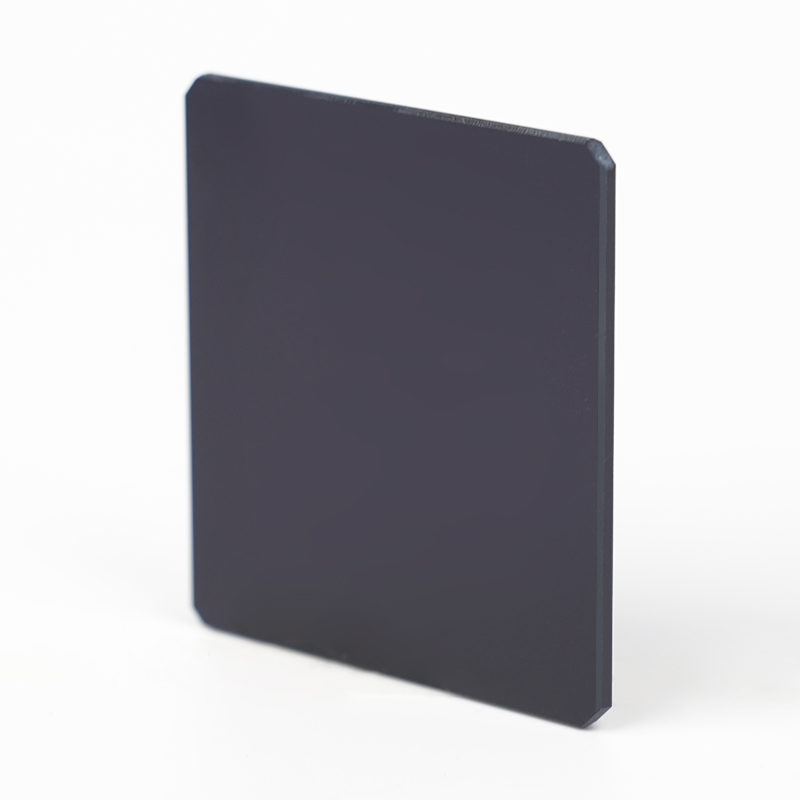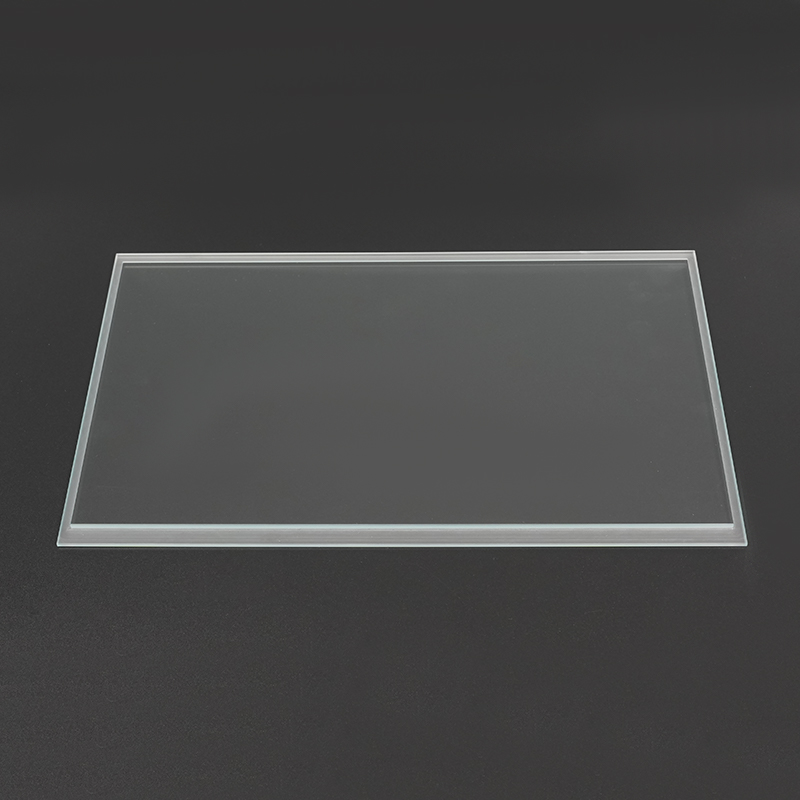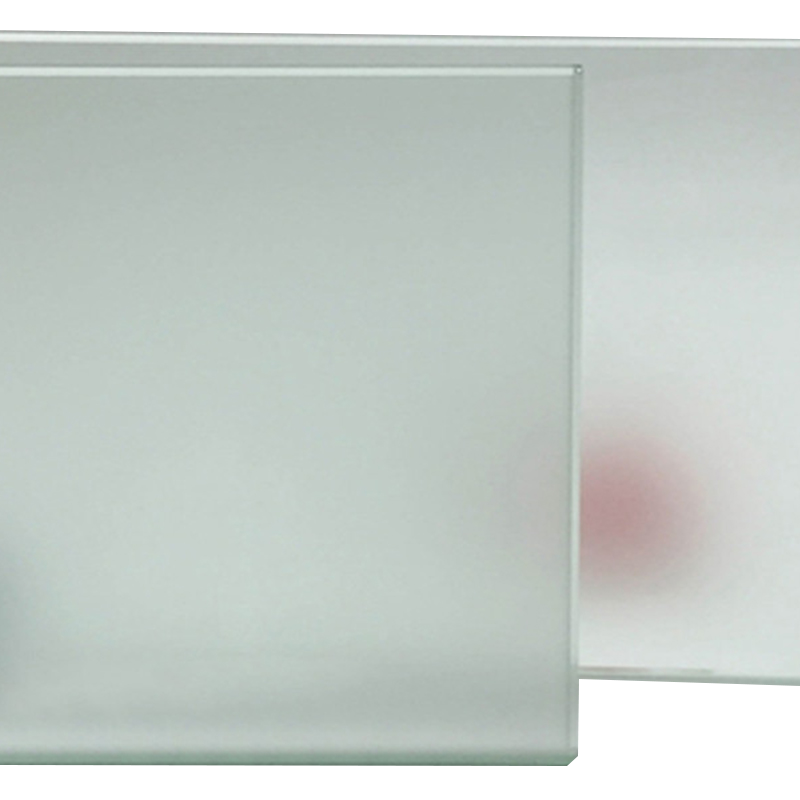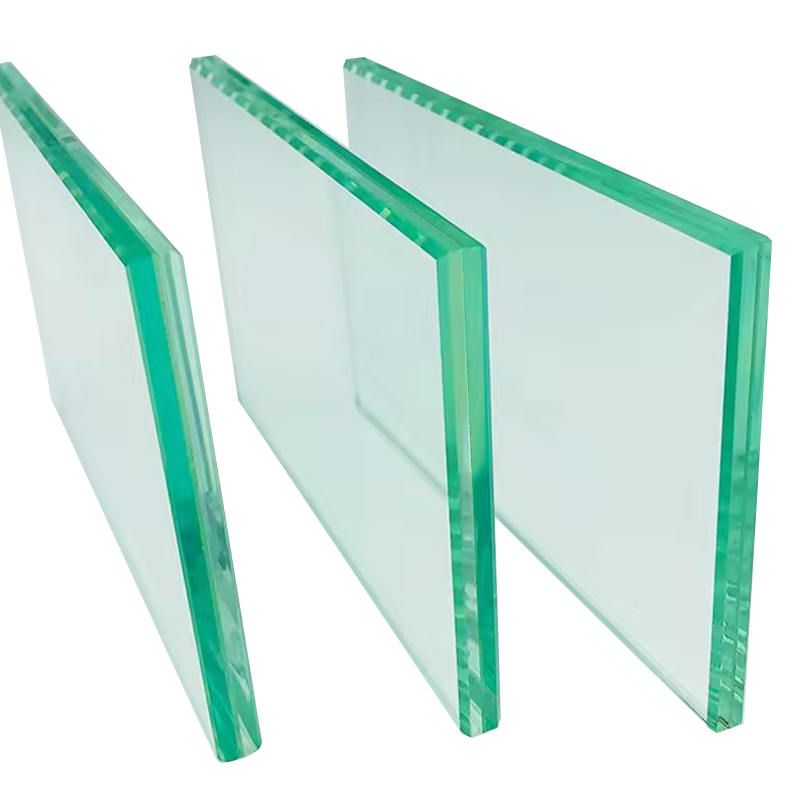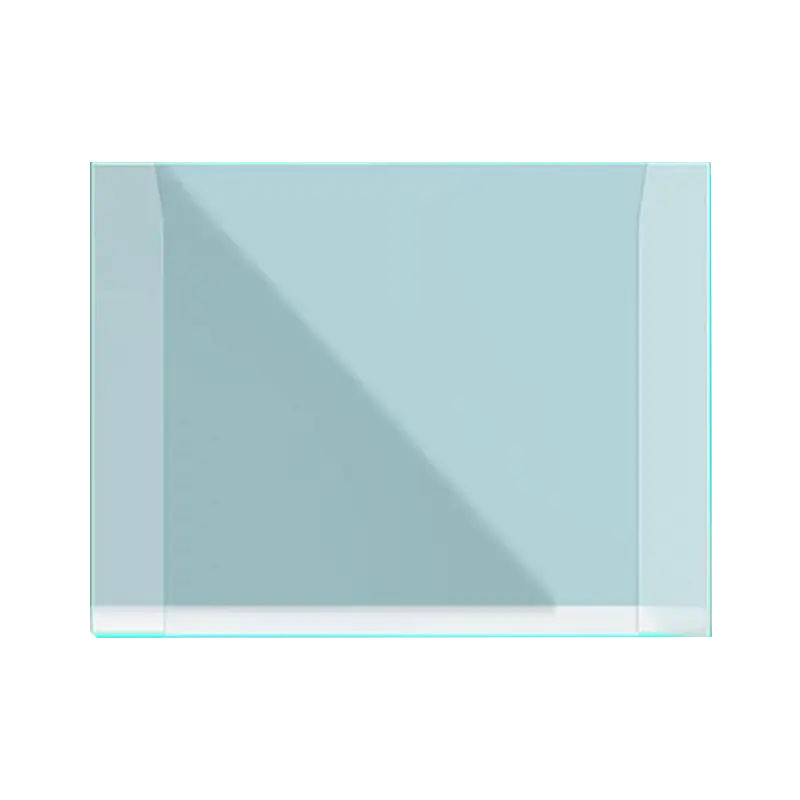

A UV cut-off glass filter is an optical material specifically designed to block ultraviolet (UV) lig...
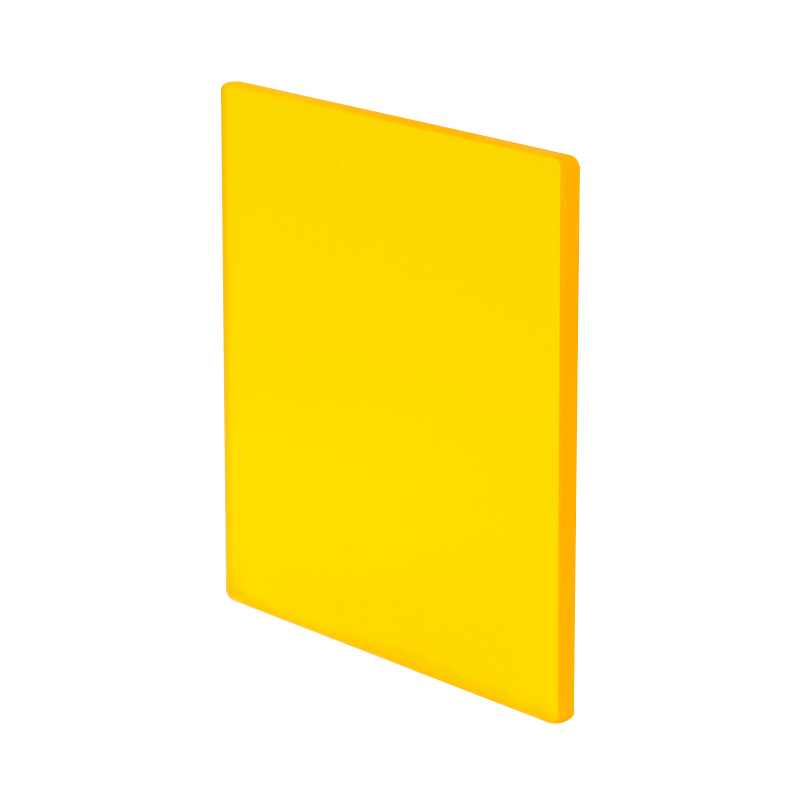
UV-visible absorption glass is a type of optical glass specifically designed to absorb light at specific wavelengths within the ultraviolet (UV) and visible (VIS) light ranges. This glass effectively blocks ultraviolet light and some visible light while allowing certain specific wavelengths of light to pass through, thereby protecting optical equipment, the human body, and other sensitive materials from excessive radiation. UV-visible absorption glass is widely used in various applications requiring spectral filtering, protection, and energy management, such as solar energy devices, optical instruments, electronic products, and medical equipment.
1. Properties
| Number | Thickness(mm) | A[2856k] | D65 | Chemical stability | ND | α×10-7(/℃) | Tg(℃) | Ts(℃) | S | |||||
| x | y | Y | x | y | Y | DA | DW | |||||||
| ZWB1 | 1 | 0.734 | 0.266 | 0.1 | 0.726 | 0.262 | 0 | 4 | 4 | 1.557 | 94 | 529 | 588 | 2.87 |
| ZWB2 | 1 | 0.532 | 0.171 | 0.9 | 0.231 | 0.032 | 0.4 | 2 | 2 | 1.52 | 97 | 515 | 589 | 2.65 |
| ZWB3 | 2 | 0.711 | 0.256 | 0.3 | 0.538 | 0.176 | 0.1 | 2 | 3 | 1.526 | 85 | 527 | 616 | 2.63 |
2. Technical Requirements
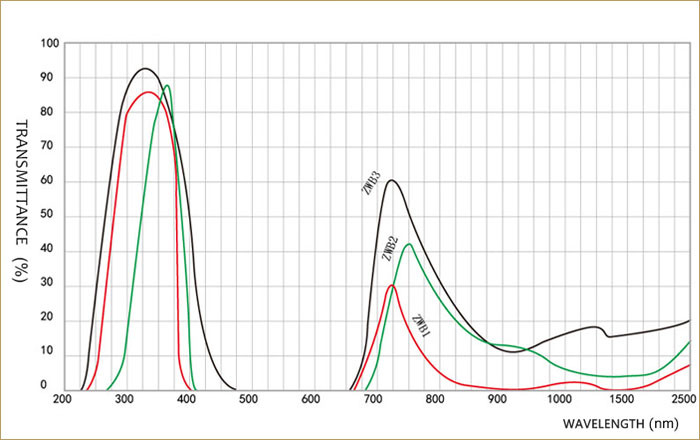
| Number | Thickness(mm) | 254(nm) | 280(nm) | 313(nm) | 334(nm) | 365(nm) | 405(nm) | 700(nm) |
| ZWB1 | 1 | ≥50.0 | ≥81.0 | ≤1.0 | ≤30.0 | |||
| ZWB2 | 1 | ≥38.0 | ≥80.0 | ≤8.0 | ≤14.0 | |||
| ZWB3 | 2 | 34 | ≥86.0 | ≤28.8 | ≤64.6 |
3. Bubble, Streak, and Stress-Related Grades
| Number | Bubble | Stripes | Stress |
| ZWB1 | C | 4 | 4 |
| ZWB2 | C | 4 | 3 |
| ZWB3 | C | 4 | 4 |
4. Spectrogram

As a leading manufacturer in the Yangtze River Delta Integrated Demonstration Zone (Jiashan, Zhejiang), Jiangnan Outdoor has been awarded "National High-Tech Enterprise" and "Jiaxing Green Factory" titles, with full certifications in ISO 9001:2015, ISO 14001:2015, and ISO 45001:2018 international standards.
When a laboratory technician reaches for a beaker to heat a concentrated acid solution, or when an optical engineer selects a substrate for a precision lens, the choice often comes down to one materi...
READ MOREWhen you hold a laboratory beaker, a high-end coffee pour-over, or an optical filter that must survive a strong light source, you are relying on borosilicate glass. The common question is not only ab...
READ MOREEvery packaging buyer knows the squeeze: customers ask for sustainable packaging, the finance team watches the unit cost, and the production line cannot afford downtime. Meanwhile the regulatory floo...
READ MOREWhat Is Optical Filtration, and Why Does It Matter? A machine-vision camera on a production line begins misreading part numbers when afternoon sunlight floods the lens. A fluorescence microscope lose...
READ MORE