Home · News · Industry News · How Is Borosilicate Glass Made: Process, Properties, and Industrial Use
How Is Borosilicate Glass Made: Process, Properties, and Industrial Use
Author: AdminDate: Aug 26,2026
When you hold a laboratory beaker, a high-end coffee pour-over, or an optical filter that must survive a strong light source, you are relying on borosilicate glass. The common question is not only about what it is, but specifically how is borosilicate glass made. The short answer is that it starts with silica sand and boric oxide, then undergoes melting at temperatures above 1,200°C, followed by forming and annealing. But the details of that process determine whether the final product can handle a Bunsen burner, a laser beam, or repeated thermal shock in an elevator display panel. This article walks through the manufacturing route, the composition, and why the production method matters more than you might expect.
Borosilicate glass is a family of silicate glasses that use boric oxide (B₂O₃) as a key glass-forming component alongside silica (SiO₂). Unlike ordinary soda-lime glass, borosilicate formulations typically contain about 70–80 percent silica and 7–13 percent boric oxide by weight. A typical composition also includes small amounts of sodium oxide, potassium oxide, and aluminium oxide to make the batch easier to melt and to stabilize the glass network.
Because the boron atoms create a stronger and more rigid structural network, the glass has a much lower thermal expansion coefficient. This is why borosilicate glass is widely known for thermal shock resistance. When you see a glass tube that can be heated repeatedly without cracking, or a filter glass that must pass through UV curing ovens, you are seeing the result of careful raw-material selection and controlled melting.
The Raw Materials: Where It All Begins
Every batch of borosilicate glass begins with precise proportions. The main ingredients are:
Silica sand (SiO₂) — the backbone of the glass network.
Boric oxide (B₂O₃) — introduced as borax or boric acid during batching.
Sodium oxide (Na₂O) — typically from soda ash, helping lower the melting temperature.
Aluminium oxide (Al₂O₃) — improves chemical durability and mechanical strength.
Potassium oxide (K₂O) — sometimes replaces part of the sodium oxide to modify electrical and optical properties.
The exact recipe depends on the intended use. For example, glass for laboratory ware needs higher boric oxide content to maximize thermal shock resistance, while glass used in precision optical components must also have tightly controlled refractive index and low internal stress.
Step-by-Step: How Is Borosilicate Glass Made?
1. Batching and Mixing
The first step is weighing and mixing the raw materials into a homogeneous batch. This seems simple, but it is critical. If oxides are not evenly distributed, the molten glass will have localized compositional variation, leading to streaks, bubbles, or regions with different expansion coefficients.
In large float lines, the batch also contains recycled cullet (clean broken glass) to save energy. For specialty glass production, however, manufacturers often adjust the batch to avoid contamination from the cullet.
2. Melting at High Temperature
The mixed batch is fed into a melting furnace. Borosilicate glass melting requires more energy than standard glass because higher temperatures are needed to homogenize the melt. Tank furnaces for borosilicate glass typically run at 1,300–1,600°C, with some continuous melting tanks operating at even higher peak temperatures. The high viscosity of the borosilicate melt means that the glass must stay in the furnace longer to allow bubbles to rise and the composition to become uniform.
In many manufacturing facilities, the melting process also involves electrical boosting, where electrodes pass current through the molten glass to generate heat directly inside the melt. This helps stabilize temperature gradients and shortens the refining time.
3. Refining and Homogenization
During refining, the glass is held at a high temperature so that gases can escape and bubbles can dissolve or rise to the surface. This is one of the most important stages for optical applications. A tiny bubble in an optical filter can scatter light and ruin the performance of an imaging system.
Refining aids such as arsenic oxide or antimony oxide are used in some glass types to release oxygen at high temperatures, physically pushing remaining bubbles out. However, more modern processes increasingly use fining agents with less environmental impact, such as tin oxide or sulfate-based fining.
4. Forming the Glass
Once the melt is bubble-free and homogeneous, the forming stage begins. There are several routes depending on the desired product shape.
For tubing and rods — used in laboratory glass, pharmaceutical cartridges, and glass syringes — the glass is drawn vertically or horizontally from the furnace. This is called the Vello process or the Danner process, both of which rely on a rotating mandrel to shape the glass into exact diameters.
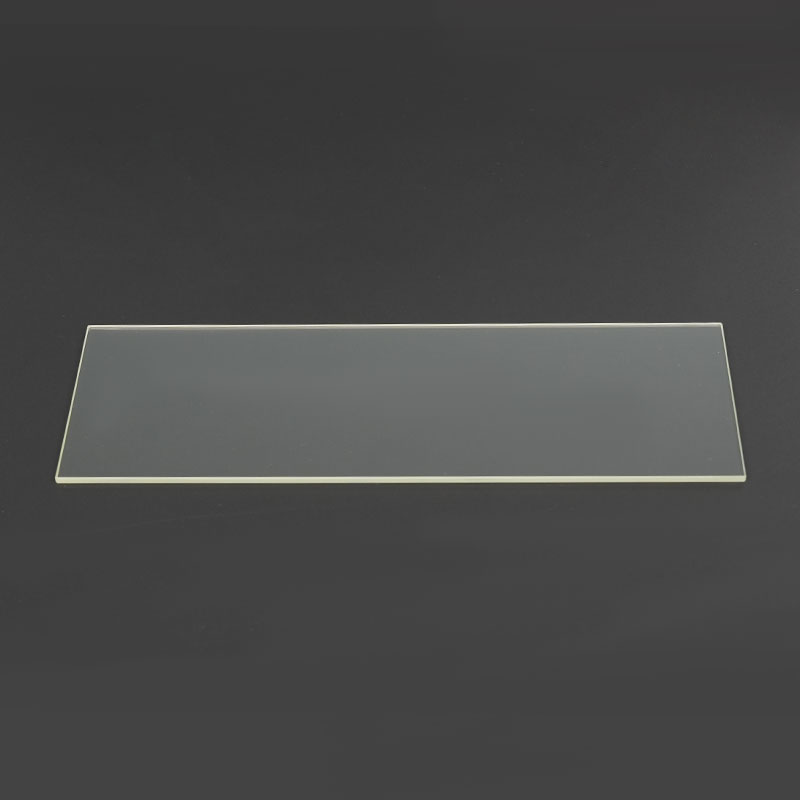
For flat sheets and panels, the glass is formed using a float bath or a vertical draw process. Borosilicate flat glass is often produced by a narrow float process or by down-draw, which gives excellent surface quality without additional grinding.
For molded products, such as glass lenses or shaped optical elements, gobs of molten glass are pressed into molds while still hot.
5. Annealing: Removing Stress
After forming, glass cools quickly on the outside while the inside remains hot. This creates stress in the glass. If this stress is not removed, the glass can shatter spontaneously or crack during later processing. Annealing is a slow controlled cooling process that eliminates thermal stress.
The glass is transferred to a lehr or annealing kiln, where it is held near the annealing point (roughly 530–580°C depending on the composition) and then cooled gradually. For optical glass, annealing is even more critical because residual stress causes birefringence — a double-refraction effect that degrades image quality.
6. Cold Processing and Quality Control
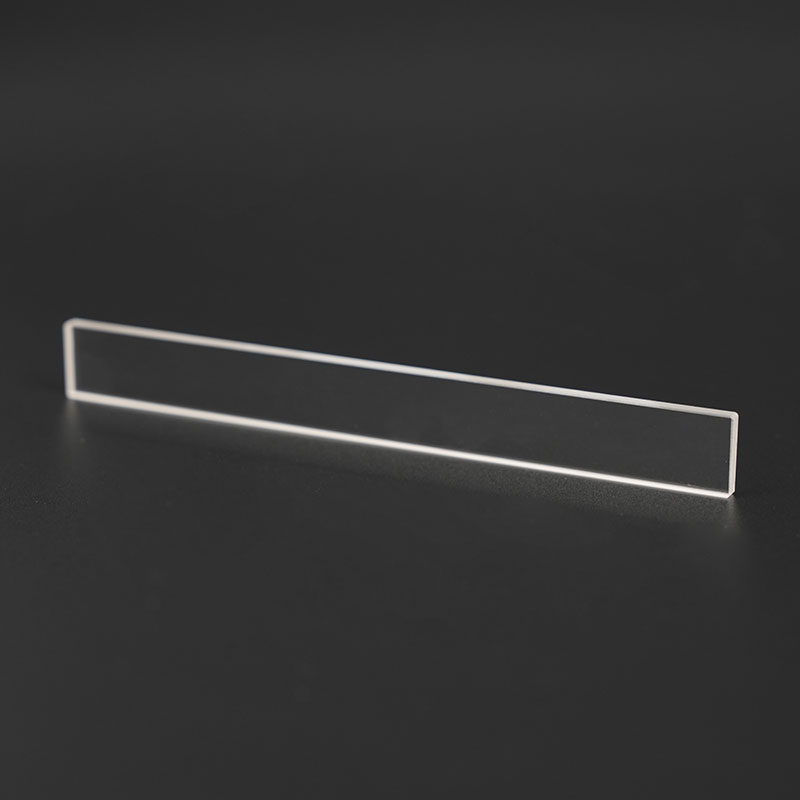
The final stage depends on the product specification. Glass tubes are cut, ground, and fire-polished at the ends. Flat glass panels are cut to size, edge-ground, and sometimes drilled. Optical components may go through precision grinding and polishing to achieve an accurate surface curvature and low roughness.
At this stage, manufacturers also inspect the glass under polarized light to check for stress. Optical instruments are used to measure transmission, refractive index, and inclusion counts. The glass composition is verified by sampling from the tank and analyzing it by spectroscopy or wet chemical methods.
Key Differences From Regular Soda-Lime Glass
To better understand the manufacturing process, it helps to compare borosilicate glass with ordinary glass. The table below summarizes the major points of difference.
Comparison of borosilicate glass and soda-lime glass across production and performance factors
From this comparison, you can see why the melting and forming processes for borosilicate glass demand more energy. But the result is a material that can survive far more demanding conditions.
How Composition Affects the Process
Because the target composition determines the viscosity curve, a borosilicate glass manufacturer must adjust process parameters accordingly. For example, a higher silica content increases the melting temperature and raises the viscosity. This makes the melt more difficult to homogenize but improves thermal resistance and lowers the expansion coefficient even further.
In precision optical applications, the glass must also have high internal transmission and very low bubble content. This is why optical-grade colorless glass is often produced in smaller tank furnaces or crucible batches, allowing stricter control. Nantong Xiangyang Optical Element Co., Ltd., for example, supplies colorless optical glass and borosilicate filter substrates in this way. Their production method is tailored to the strict requirements of optical components rather than mass-produced containers.
As the chart shows, borosilicate sits between soda-lime glass and quartz glass. This explains why it is used in demanding applications that do not justify the high cost and difficult process of quartz glass.
Why the Manufacturing Process Matters for Buyers
If you are sourcing glass components, you are not just buying a material specification. You are buying the result of many production decisions. Here is what the process tells you about product quality.
Melting Quality Affects Bubble Content
Bubbles, also known as seeds or blisters, directly affect optical clarity and strength. A glass with poor refining will contain microscopic bubbles that appear as tiny points under strong illumination. For optical filters, this can cause light scattering. For laboratory glassware, even small bubbles can reduce mechanical strength.
Annealing Affects Mechanical Stability
Poor annealing means residual internal stress. In the worst case, glass can crack immediately after cutting. In a less obvious scenario, it may have higher breakage rates during drilling, edge grinding, or tempering. A reliable supplier will regularly check stress birefringence as part of quality control.
Forming Method Affects Dimensional Accuracy
For products like optical glass windows or filter glass, thickness tolerance matters. The method chosen — drawing, pressing, grinding — determines whether thickness remains uniform across a large sheet. Small variations in thickness cause optical distortion in transmitted light.
Borosilicate Glass in Optics: A Closer Look
Borosilicate glass is heavily used in optical components. The reasons are clear: high transmission from the UV to the near-infrared range, good surface hardness, excellent thermal stability, and high resistance to chemical attack. However, different applications require different grades.
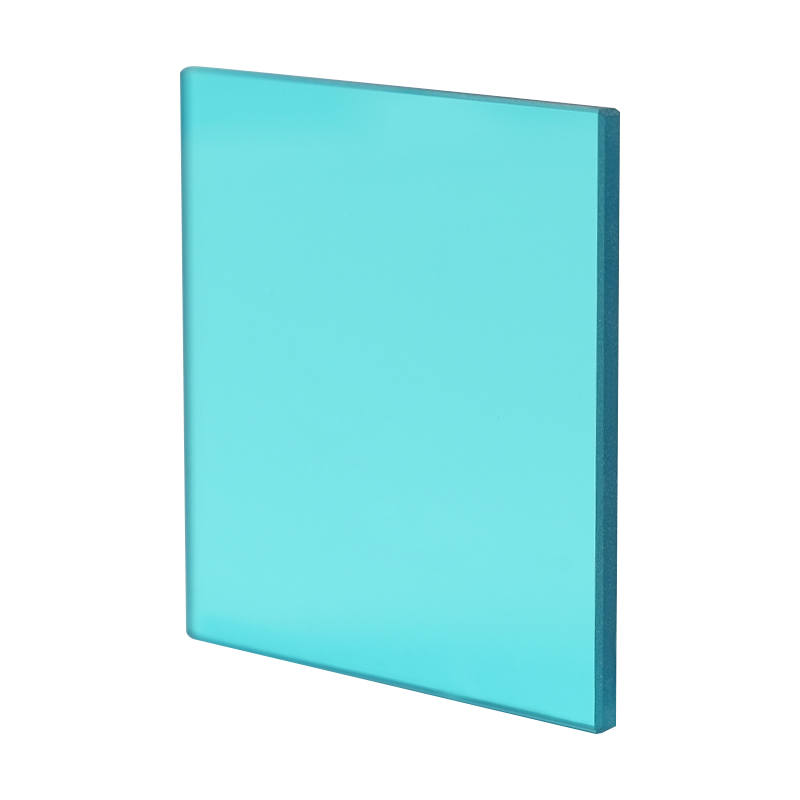
For example, a neutral density filter uses a heavily colored glass formulation with absorptive properties. This allows reducing transmitted light without changing the color balance. Meanwhile, a colorless borosilicate glass with a very low iron content is used when high internal transmission is required across a broad wavelength range. The difference is not just in the batch composition; it changes the melting and forming process because some additives alter the viscosity and tendency to crystallize.
If you need an optical filter that can handle a high-power light source without cracking, you should look for a material that has been properly annealed and has low bubble content. These qualities are not visible from a simple spec sheet. You need a manufacturer that checks them.
Common Problems in Borosilicate Glass Production
Even with modern equipment, production errors can happen. Understanding them helps you ask the right questions when qualifying a supplier.
Typical production defects and their impact on borosilicate glass products
Defect
Cause
Impact
Cords or striae
Incomplete mixing or inhomogeneous temperature distribution
Fluctuations in refractive index, visible distortion in optics
Bubbles and seeds
Insufficient refining time, contaminated batch
Reduced transmission, possible weak points in the glass
Residual stress
Incorrect annealing schedule
Cracking during cutting or drilling, birefringence in optical parts
Devitrification
Crystallization caused by wrong temperature or nucleation particles
Opaque regions, loss of mechanical strength
Surface waviness
Incorrect forming temperature or thermal gradients
Optical unevenness, especially in flat glass
This is also why experienced manufacturers emphasize process control rather than just inspecting the final product. It is much safer to control the melting atmosphere and temperature profile from the beginning than to sort out defective parts later.
How to Use This Knowledge in Your Purchasing Decision
When you contact a borosilicate glass supplier, ask about their production equipment and quality checks. Specifically, ask about the melting temperature range, annealing method, and what inspection tools they use. A professional manufacturer will explain how they control bubble content and stress uniformity. You can also ask whether they can customize the glass chemistry for your target wavelength range. For instance, manufacturers like colorless borosilicate optical glass suppliers often work from detailed customer specifications. If you need coated filter glass, the substrate quality affects coating adhesion and the final optical performance of the filter.
Also, do not overlook flatness and thickness tolerance. For a polished glass window used as a protective cover in a laboratory instrument, the flatness determines whether the optical path remains accurate. For a cut-off glass filter, the thickness variation changes the spectral curve. A good supplier will always provide a clear tolerance range and test report.
If you are sourcing for production-line components such as UV cut-off glass filters, make sure the glass has been annealed after cutting or polishing. This is particularly important for large sizes, where uneven heating during processing can introduce stress.
The manufacturing process is often described in words, but a visual view helps clarify the vertical structure of a melting tank and the flow of material.
The diagram simplifies the vertical melting tank concept: raw materials enter at the top, the melt is heated by combustion and electricity, and refined glass flows out at the bottom. From there, it is drawn into tubing or sheeting. This type of melting tank allows continuous operation for months, which is why large-scale borosilicate glass production relies on stable process control.
Distinguishing Good Borosilicate Glass From Cheap Substitutes
Not every product described as "borosilicate glass" meets the same quality level. Some imported containers use a lower boric oxide content to reduce cost. The glass still carries the borosilicate name, but its thermal performance is closer to standard soda-lime glass.
How can you tell the difference? The most obvious check is thermal shock resistance. Place the glass in boiling water and transfer quickly to cold water. But that is not a production method. A more reliable route is to ask the supplier for a full composition certificate. The coefficient of thermal expansion is also listed on genuine borosilicate glass datasheets. A value near 3.3 × 10⁻⁶ K⁻¹ indicates a well-formed borosilicate network. A value above 5 × 10⁻⁶ K⁻¹ suggests reduced boron content.
For optical-grade applications, transmission tests in the UV range are also useful. Borosilicate glass with high iron contamination will show a lower UV cutoff and poor transmission in the 280–350 nm range. This matters if the glass is used in a UV light system or in a solar simulator.
Summary: The Journey From Sand to Functional Borosilicate Glass
Borosilicate glass is made by batching silica and boric oxide with modifiers, melting the mixture at high temperature, refining the melt to remove bubbles, and then drawing, casting, or pressing the glass into shape. After forming, annealing removes stress. Cold processing adds the required dimensions, surface quality, and tolerances.
The process is more demanding than ordinary glass production because borosilicate melt is more viscous and requires higher temperatures. But the payoff is significant: thermal resistance, chemical durability, and optical stability. Whether your application is a laboratory flask, an optical window, or a UV filter glass, the production method affects how well the glass performs.
Frequently Asked Questions
Q1: Is borosilicate glass the same as heat-resistant glass?
Borosilicate glass is the most common type of heat-resistant glass. Its low thermal expansion coefficient allows it to survive sudden temperature changes better than ordinary glass. However, not all heat-resistant glass has an identical borosilicate composition; some products contain other oxides to achieve a similar effect.
Q2: What is the difference between borosilicate glass and fused quartz?
Fused quartz is made entirely from silica and has even higher thermal resistance and lower expansion. However, it is much more expensive and harder to manufacture. Borosilicate glass is the practical choice for most applications because it balances performance, cost, and formability.
Q3: Why does borosilicate glass have high chemical resistance?
Boron atoms are strongly bonded in the glass network, which reduces the leaching of alkali ions from the surface. This is especially important in laboratory vials, pharmaceutical containers, and optical systems that may be exposed to humidity or mild acids.
Q4: Can borosilicate glass be used for laser optics?
Yes, for many visible and near-infrared laser systems, borosilicate glass provides sufficient transmission and thermal stability. For extremely high-power applications, fused silica may be necessary, but borosilicate glass is often used in laser filters, protective windows, and optical flats.
Q5: How is borosilicate glass tube formed?
Molten glass flows from the furnace through a circular mandrel. Air is blown through the center while the glass is drawn and stretched. This is called the Danner or Vello process. The diameter is controlled by the drawing speed and air pressure.
Q6: Why is borosilicate glass more expensive than ordinary glass?
Raw materials cost more, the melting temperature is higher, and the production lines run more slowly because the melt is more viscous. Energy consumption and precision forming also increase production cost. The superior thermal and chemical properties are the reason buyers accept this cost.




 English
 Español