What Is Optical Filtration, and Why Does It Matter?
A machine-vision camera on a production line begins misreading part numbers when afternoon sunlight floods the lens. A fluorescence microscope loses contrast because excitation light bleeds into the emission channel. A temperature sensor drifts because absorbed visible light heats the housing faster than the sensing element responds. These failures look unrelated, but they share one root cause: unwanted wavelengths reaching the detector. The standard remedy is optical filtration — the deliberate selection of which wavelengths pass through a component and which are blocked or absorbed.
Optical filtration is implemented in two physically different ways. Interference filters stack dozens of thin dielectric layers to reflect selected wavelengths; they offer sharp spectral edges but shift with the angle of incidence. Absorptive filters, by contrast, work inside the glass itself. Metal oxides and other dopants are dissolved into the melt, so the material absorbs specific photon energies while transmitting others. Because the absorbing species is distributed through the bulk, colored-glass filters stay stable at non-normal incidence, under moderate temperature, and over a long service life.
This article explains how optical filtration works in practice, where colored-glass filters outperform coated alternatives, and what to verify before you specify a filter for your system.
What Optical Filtration Does in a Real System
Filtration performs four practical jobs in an optical system:
Blocking stray light — sunlight, ambient infrared, or lamp radiation that saturates a detector or reduces image contrast.
Isolating a signal band — passing a fluorescence emission, a laser line, or a specific color region while rejecting the rest.
Balancing intensity — reducing light level without changing spectral content, as required by cameras, sensors, and calibration instruments.
Managing thermal load — absorbing near-infrared energy before it reaches optics or heat-sensitive components.
For industrial equipment, cut-off glass filters are often the first choice because they combine a stable transition edge with simple, rugged construction. A UV cut-off filter blocks the 100–400 nm band while passing visible light; a heat-absorbing filter does the reverse by transmitting visible light and absorbing infrared. Both are everyday solutions in machine vision, lighting, instrumentation, and safety equipment.
The Four Main Filter Families in Optical Filtration
Hundreds of filter designs exist, but most demand in industrial optics falls into four families, summarized in Table 1.
Table 1. Comparison of the four main optical filter families.
Filter family
Operating principle
Typical applications
Key limitation
Cut-off (longpass / shortpass)
Absorbs wavelengths on one side of a transition edge
UV blocking, color separation, IR protection
Edge slope is gradual, not abrupt
Selective absorption
Removes a specific spectral band while passing the rest
Heat insulation, wavelength calibration, color correction
Band position is fixed by the glass composition
Neutral density (ND)
Reduces light intensity evenly across a broad range
Camera calibration, laser attenuation, detector protection
Absorption varies slightly with wavelength
Polarizing
Transmits only one plane of polarization
Glare reduction, stress inspection, ellipsometry
Requires correct orientation relative to the light
Cut-off glass filters
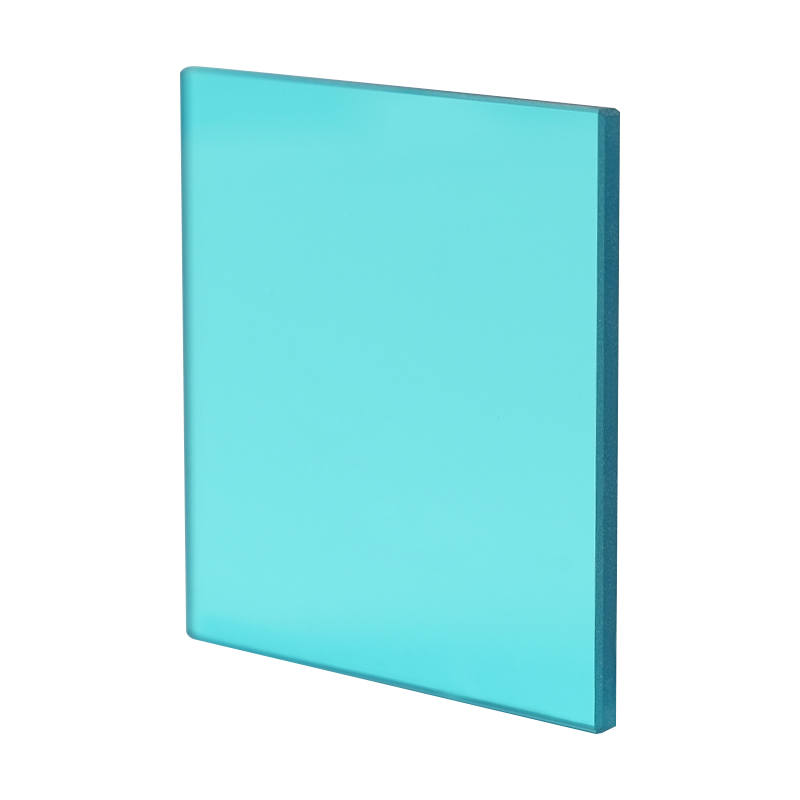
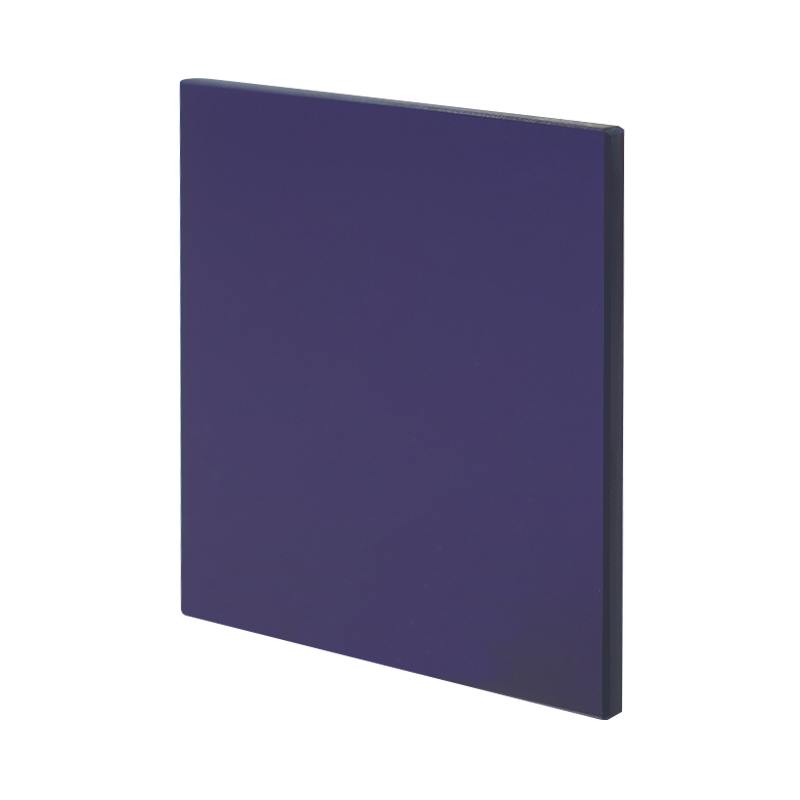
A longpass filter blocks shorter wavelengths and transmits longer ones; a shortpass filter does the reverse. The design is defined by its transition wavelength. A typical UV cut-off glass filter, for example, suppresses radiation below roughly 380–400 nm while passing the visible spectrum. Production ranges include golden-yellow, orange, and red cut-off glass with transition positions across the entire visible band, as well as ultraviolet and infrared versions.
Instead of a single edge, a selective absorption filter removes a defined band inside the spectrum. Heat-absorbing glass transmits visible light while absorbing near-infrared radiation, which is why it is common in projection, lighting, and display systems. The same family includes heat-insulating filter glass for thermal management, plus color-correcting, wavelength-calibration, and UV-visible absorbing glasses for analytical and photographic applications.
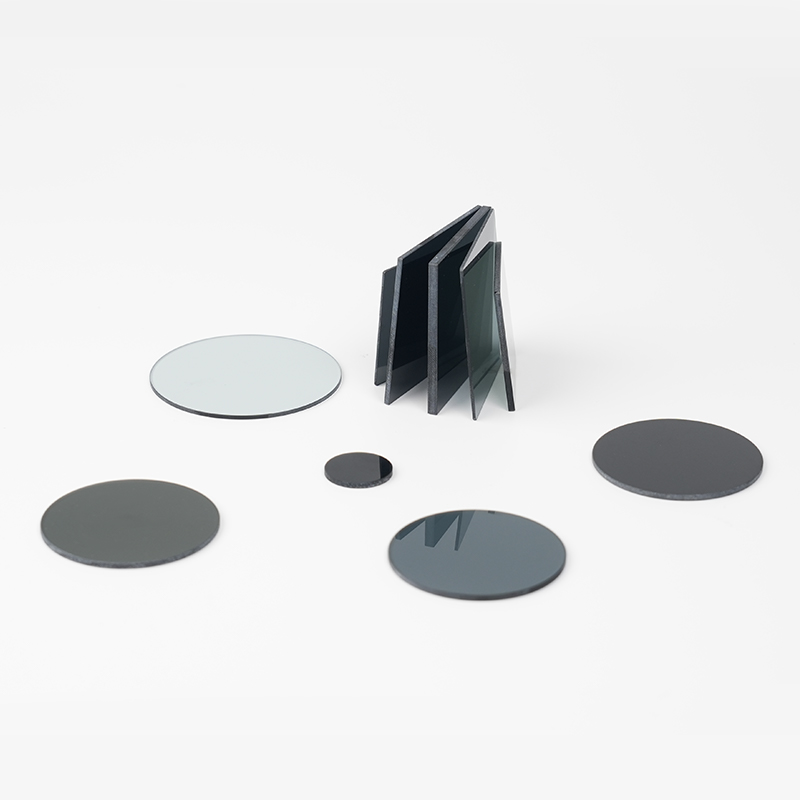
When the goal is attenuation rather than wavelength selection, neutral density glass is the standard tool. ND filters reduce light intensity uniformly, letting cameras, spectrometers, and laser systems operate inside their linear response range without shifting color balance. They are specified by optical density, which maps directly to a transmitted-light percentage.
Polarizing filters
Finally, polarizing filters control the direction of the electric-field vector rather than the spectrum. They are essential for glare reduction in machine vision, stress analysis in transparent parts, and contrast enhancement in displays. Matching the extinction ratio, transmission, and wavelength range to the application matters more than any single specification; a dedicated review of how polarizing filters work is a good starting point.
Reading a Spectral Curve: What a Real Filter Does
No optical filter has a perfectly square transmission edge. Real filters show a transition region where transmittance changes gradually from blocking to transmitting. For colored-glass longpass filters the transition typically spans a few tens of nanometers, while interference coatings can reach much steeper slopes. The schematic curves below show representative shapes for the main filter types.
Figure 1. Schematic transmission curves for the four main filter families.
Three details matter when you read a curve. First, the cutoff wavelength — the point where transmittance reaches 50% of the maximum — defines the actual position of the filter. Second, the transition slope determines how cleanly the filter separates two wavelengths. Third, in-band transmittance tells you how much signal your system loses. A well-made colored-glass filter should show high, uniform transmission across the passband and no secondary absorption features.
How to Choose the Right Optical Filter
Choose a filter by working backward from the optical problem rather than from a catalog page. Start with five questions:
Which wavelengths must pass, and which must be blocked?
How much transmitted signal can the system afford to lose?
What angle of incidence will the filter see in the final assembly?
What temperature, humidity, and UV exposure will it face?
What size, shape, and volume do you actually need?
For many projects the honest comparison comes down to absorptive colored glass versus dielectric coatings. The radar chart below shows where each technology typically excels.
Figure 2. Typical strengths of absorptive colored glass and dielectric coated filters.
Colored glass wins on angle stability, thermal durability, and low-volume cost; dielectric coatings win on spectral precision. If the system needs very narrow bands, a coated filter is usually necessary. If it needs a reliable edge, a stable heat load, or a custom shape at moderate volume, a colored-glass filter is the more practical route. The topic is covered in more depth in a dedicated guide on choosing the right cutoff glass filter.
Optical Density: The Simple Math Behind Neutral Density Filters
Neutral density specifications use optical density (OD), defined as OD = log10(1/T), where T is the transmitted fraction. The scale is logarithmic, so every step of 0.3 in OD halves the transmitted light.
Figure 3. Transmitted light percentage versus optical density for ND filters.
The chart above gives the transmitted percentage for common ND values. An OD 0.9 filter transmits about 12.6% of incident light and is a frequent choice for sensor protection. When filters are stacked, their optical densities add: OD 0.6 plus OD 0.3 equals OD 0.9. That property makes neutral density filter glass convenient for tunable attenuation, provided the combined transmission stays above the detector noise floor.
Filtration performance depends on the manufacturing process as much as on the glass formula. Three checks matter when evaluating a supplier. First, request a measured transmission curve rather than a nominal data sheet; the real edge position and in-band transmission are what your system will see. Second, confirm thickness, diameter, and edge-finish tolerances; mechanical deviations affect mounting, and surface defects scatter light. Third, verify behavior in your environment; temperature, humidity, and long-term UV exposure can all alter transmission in poorly processed glass.
Nantong Xiangyang Optical Element Co., Ltd. has produced optical glass since 1996 in a 10,000-square-meter facility in Jiangsu, China. The company is recognized as a provincial high-technology enterprise, holds ISO 9001 quality management and 3C certifications, and manufactures more than 100 colored glass types spanning the ultraviolet, visible, near-infrared, and infrared regions. Custom sizes, thicknesses, and shapes are available from prototype to production. The same standards apply across the range; optical glass quality requirements are documented separately in our optical glass quality guide.
Inside a Colored-Glass Filter: How Absorption Works
The isometric diagram below shows how a colored-glass filter treats a beam of white light. The glass body contains dopant ions dissolved in the melt. Photons whose energy matches the dopant absorption bands are captured inside the material and converted into vibrational energy — in practical terms, heat. The rest of the spectrum passes through, losing only a few percent to surface reflection.
Figure 4. Isometric view of a colored-glass filter: white light enters the glass body, part of the spectrum is absorbed, and the remaining light is transmitted.
This bulk absorption mechanism explains why colored-glass filters do not show the angle-dependent wavelength shift typical of interference coatings. It also means they can be cut, ground, and polished into rectangular windows, round plates, or shaped blanks without changing their spectral behavior — a real advantage for custom optical filtration.
Frequently Asked Questions about Optical Filtration
Q1. What is the difference between a cut-off filter and a band-pass filter?
A cut-off filter (longpass or shortpass) transmits everything on one side of a transition wavelength. A band-pass filter transmits only a narrow window and blocks both sides, usually by combining two cut-off edges or using a coated filter.
Q2. Can colored glass filters withstand high temperatures?
Absorptive glass generally handles higher continuous temperatures than polymer filters or coated filters, but the safe limit depends on the specific glass type, thickness, and mounting. A short thermal test on the actual part is the reliable way to confirm.
Q3. Can you supply custom shapes and thicknesses?
Yes. Filters can be cut, ground, and polished to custom diameters, rectangular sizes, and thicknesses, with edge processing and surface finish matched to your drawings.
Q4. How can I verify the cutoff wavelength of the delivered filter?
Ask for the measured transmission curve from a spectrophotometer and compare the 50% transition point with the agreed specification. A reputable supplier provides batch data with delivery.




 English
 Español