Home · News · Industry News · What Does a UV Filter Do? How UV Cut-Off Glass Blocks Light Below 400 nm
What Does a UV Filter Do? How UV Cut-Off Glass Blocks Light Below 400 nm
Author: AdminDate: Oct 07,2026
A machine-vision station starts producing noisy images right after a lamp is replaced. The lens did not move, the focus did not shift, and the part is the same. What changed is that a narrow band of ultraviolet light around 365 nm now reaches the sensor. A 2 mm UV cut-off glass plate in front of the lens removes that band, and the contrast comes back. That is the entire job of a UV filter: it takes ultraviolet light out of a beam without taking much visible light with it.
The short answer is this: a UV filter blocks wavelengths below roughly 380 to 420 nm and passes the visible band from about 400 to 700 nm. Where exactly blocking turns into transmission depends on the glass composition and the thickness of the part. Two filters sold under the same name can behave very differently if one is 1 mm thick and the other is 3 mm.
People use the phrase "UV filter" for at least four different parts, and mixing them up causes most of the confusion in quotes and specifications:
A camera lens UV filter, screwed onto the front thread of a lens.
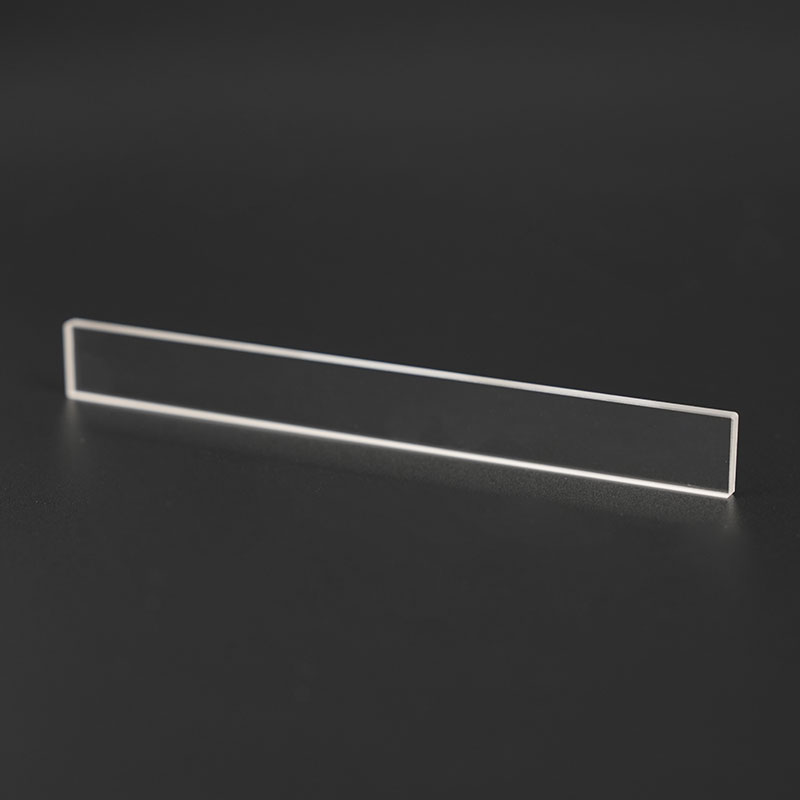
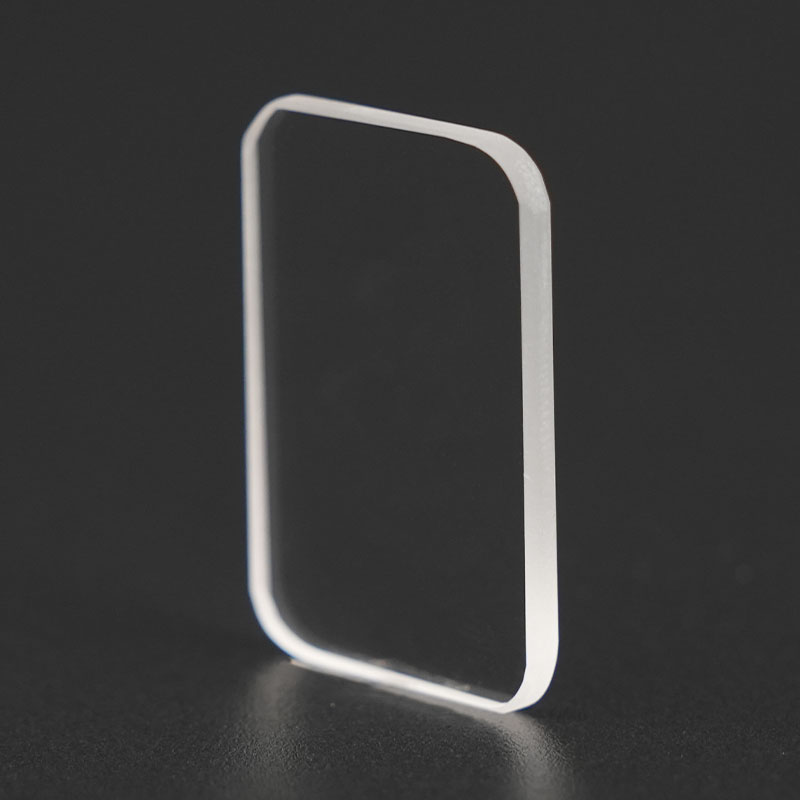
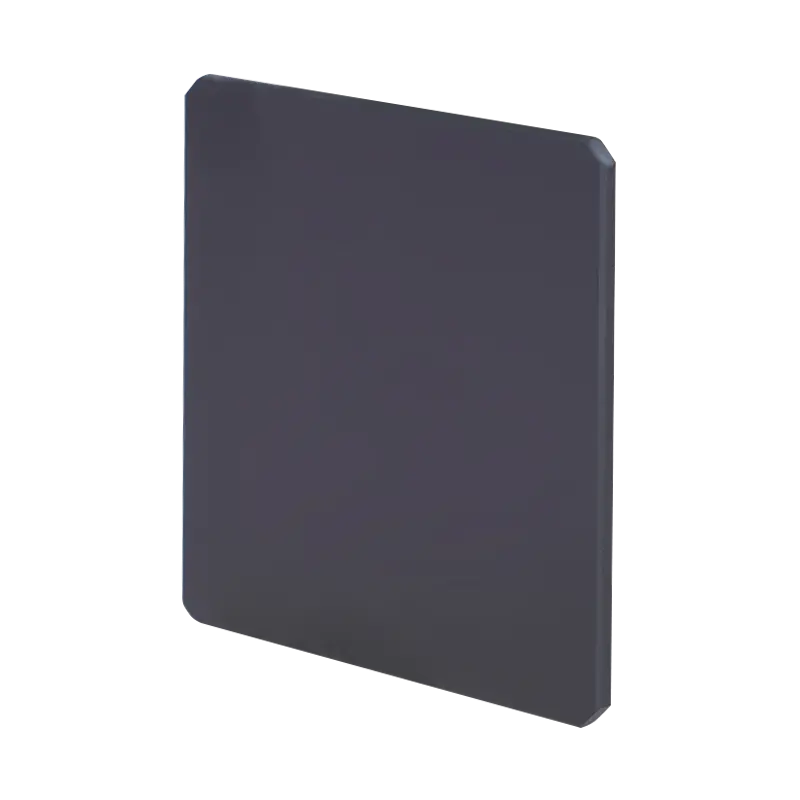
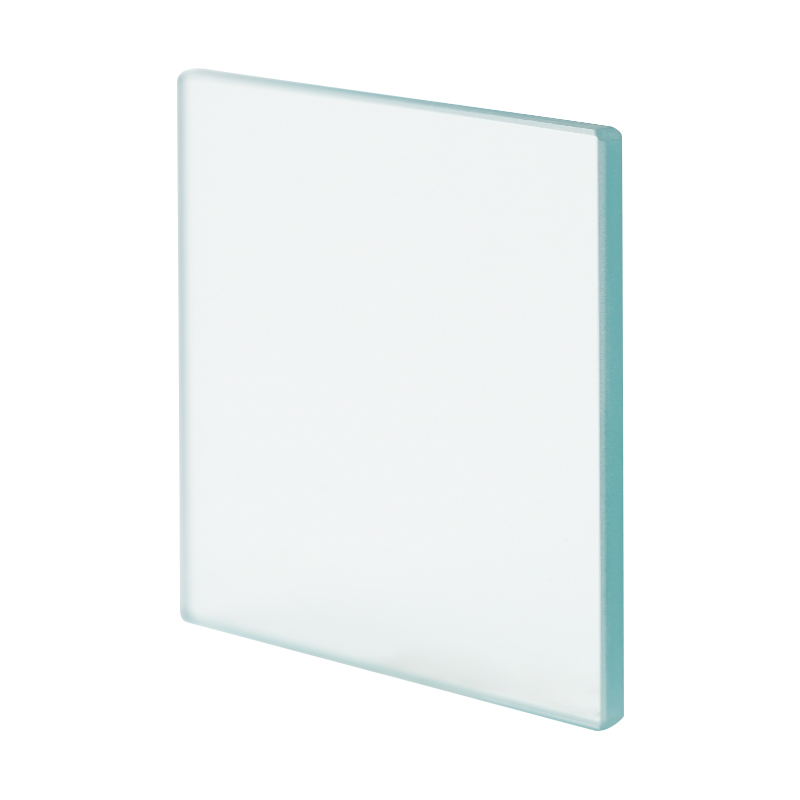
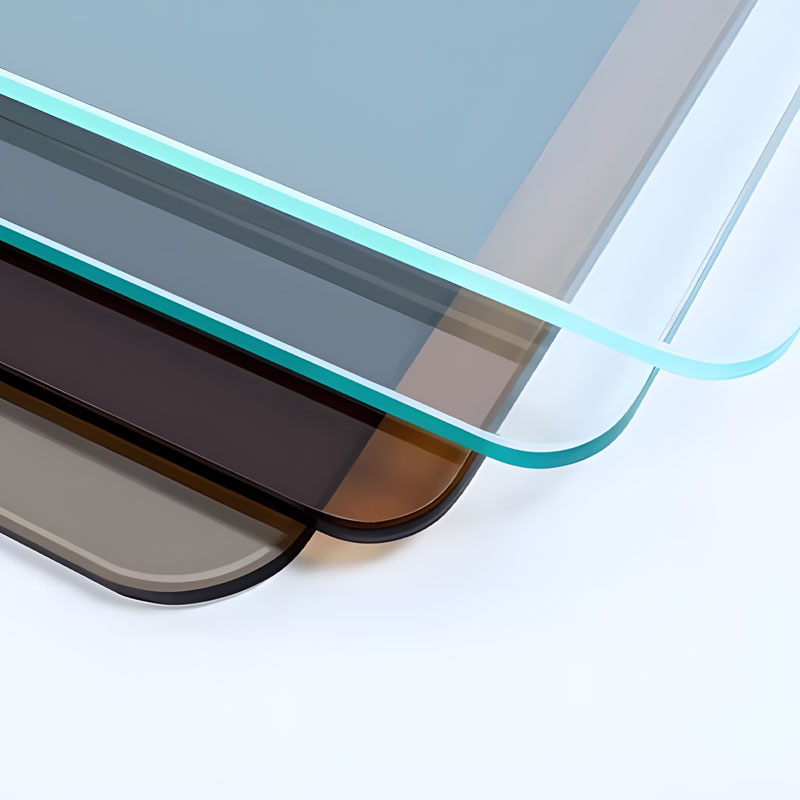
A UV cut-off glass plate, a bulk-absorbing glass part used inside instruments, sensors and lamp housings.
A UV-blocking coating, an interference stack deposited on a substrate.
UV-protective cover glass, glazing used on displays, artwork or equipment enclosures.
A UV filter reduces the amount of ultraviolet radiation that travels through an optical path. Every practical benefit follows from that one behaviour: haze control in photography, sensor protection in machine vision, colour stability in museum lighting, and UV screening for anyone looking through the glass.
Four consequences matter when you are choosing a part:
Blocking region. Below the cut-on wavelength, transmittance drops to a low value. The depth of that stop is given as a percentage of transmittance or as optical density, and it is always tied to a stated thickness.
Passband. Above the cut-on, visible light passes. Typical cut-off glass grades reach high internal transmittance across the visible band, so brightness loss in a well-matched filter is small.
Edge sharpness. A steep transition of a few tens of nanometres keeps colour rendering intact. A gentle slope pulls violet and deep blue out of the image and shifts white balance.
Angle stability. Absorption inside the glass works the same at any angle of incidence, while a coating shifts its cut-on toward shorter wavelengths as the beam angle increases.
Absorption in the glass or reflection at the surface?
There are two ways to remove UV from a beam, and they fail in different ways. Knowing which one you are buying prevents most field problems.
Bulk-absorbing glass filters
Coloured optical glass contains dopants that absorb short wavelengths inside the material. The specification therefore follows the part: cut-on wavelength, transmittance in the passband and thickness. Because the filtering happens in the bulk rather than at a surface, performance does not change with the angle of the beam and does not disappear if the surface is cleaned or handled.
Interference coating filters
A dielectric stack reflects UV back toward the source and transmits the visible band. Coatings can produce very steep edges in a thin package, but the cut-on shifts with incidence angle, and the stack can be sensitive to humidity, abrasion and aggressive cleaning. In high-power lamp paths the reflected energy also has to go somewhere.
For most instrument, sensor and lighting work, absorbing glass is the more repeatable choice, because the curve is a property of the material rather than a surface condition that can be damaged in service.
The UV spectrum in numbers
Ultraviolet is not one thing. The band below 400 nm is divided into three ranges, and a filter that handles one of them well may barely touch another. Ordinary float glass already blocks most UVB and a share of UVA, which is why a dedicated cut-off grade is needed when UVA is the problem.
UV bands by wavelength; a UV filter removes the first three bands and keeps the fourth.
Band
Wavelength
Typical sources
What a UV filter does
UVC
100-280 nm
Germicidal lamps, welding arcs
Blocked by nearly all optical glass and standard window glass
UVB
280-315 nm
Sunlight, arc lamps, curing lamps
Strongly blocked by most UV cut-off grades
UVA
315-400 nm
Sunlight, black lights, UV LEDs
The band that passes ordinary glass; needs a dedicated cut-off grade
Visible
400-700 nm
All common light sources
Kept, with high transmittance in the passband
Solar ultraviolet reaching the ground
UVA
~95%
UVB
~5%
Approximate split commonly cited in public health and lighting references; UVC does not reach the ground in meaningful amounts.
How to read a UV filter specification
A UV filter is described by a curve, not by a single number. When a supplier says only that a part "blocks UV", ask for the values below. They are the difference between a sample you can evaluate and a quote you cannot compare with anything else.
Six values that turn "a UV filter" into a part you can actually order.
Parameter
How it is written
Why it matters
Cut-on wavelength
nm, usually the 50% transmittance point
Sets where blocking ends and transmission begins
Blocking level
%T or optical density at a named wavelength
Shows how deep the stop is in the UV
Passband transmittance
Average %T over 420-700 nm
Controls brightness and colour rendering
Thickness
mm, with tolerance
The curve is only valid at that thickness
Glass grade
Catalogue name or reference number
The same trade name from two suppliers is not the same curve
Surface and form
Scratch/dig, flatness, parallelism
Critical for imaging, laser and interferometric paths
If the terminology is new to you, this primer on what a cut-off glass filter is walks through the same curve from a buyer's point of view.
Where UV filters earn their place in real equipment
The parts are inexpensive relative to the systems they protect, which is why they show up in so many different product lines.
Machine vision and inspection. UV LEDs at 365 nm and 405 nm excite fluorescent adhesives and coatings. A cut-off plate keeps the excitation band out of the imaging channel so the fluorescent signal is not swamped.
Photography. On film, a UV filter reduced blue atmospheric haze. On digital sensors, most UV filtering already happens at the sensor stack, so the practical benefit today is front-element protection and some flare control in bright, hazy conditions.
Fluorescence microscopy. Excitation light must not leak into the emission channel; a UV cut-off element combined with a bandpass filter does that job.
Lighting and displays. UV output from lamps degrades polymers, yellows diffusers and fades pigments. Filtering it at the source extends the life of everything downstream.
Safety windows and curing shields. The glass removes the UV band while keeping the process visible to an operator.
Architectural and museum glazing. Standard float glass blocks most UVB; a dedicated cut-off grade raises UVA protection for artworks, textiles and displays.
Selective grades also let you shape the transition: a gentler edge is sometimes preferred when the imaging system needs to keep a little violet for colour fidelity, while a hard edge is preferred when the UV source is strong.
Mistakes that cost money when buying UV filter glass
Most rejected shipments we see are not caused by bad glass. They are caused by a specification that was never pinned down.
Comparing transmittance values measured at different thicknesses. One millimetre and three millimetres of the same grade are effectively two different filters.
Assuming that "UV filter" means the same cut-on everywhere. Consumer photography filters, industrial cut-off glass and coated stacks sit in different places on the curve.
Over-specifying blocking depth. Going from a modest stop to a very deep one can multiply cost without changing what the system actually needs.
Forgetting where the absorbed energy goes. In a high-power lamp path, absorbed UV becomes heat in the glass; that heat has to be managed.
Ignoring the visible edge. A cut-on placed at 420 nm removes deep blue and violet, which changes colour rendering in photography, display and inspection work.
Putting a coating on an exposed outer surface where it will be cleaned and abraded.
State the wavelength range, the required blocking level, the passband average and the thickness you can accommodate. With those four numbers, a supplier can match a grade instead of guessing.
Frequently asked questions about UV filters
Q1. What does a UV filter do on a camera lens?
It removes the near-ultraviolet part of the scene light before it reaches the lens. On film this reduced blue haze; on digital sensors most UV filtering is already internal, so the practical gain today is front-element protection and a small reduction in flare under bright, hazy light.
Q2. Does a UV filter block 100% of ultraviolet light?
No. A UV cut-off glass filter reaches very low transmittance in the blocking region, but not zero, and the depth depends on thickness. Ask for a percentage or optical density value at a named wavelength and thickness.
Q3. What is the difference between a UV filter and a UV cut-off glass filter?
They describe the same function. "UV filter" is the everyday phrase; "UV cut-off glass filter" is the optical industry name for a bulk-absorbing glass plate with a defined cut-on wavelength and a defined passband.
Q4. Does a UV filter reduce brightness or change colour?
A well-matched cut-off keeps passband transmittance high, so brightness loss is minor. Colour shifts when the cut-on sits too close to the visible edge, because a 420 nm cut-on removes deep blue and violet from the transmitted beam.
Q5. How thick should UV filter glass be?
Thickness sets the curve, so there is no universal answer. Always quote thickness together with the transmittance value, and remember that a 1 mm and a 3 mm part of the same grade behave as different filters.
Q6. Can a UV filter be used with machine vision cameras?
Yes, and it is common in UV-excited fluorescence inspection, where the excitation band must not leak into the imaging channel. It works best as the last element in front of the lens, sized to the lens aperture.
What a UV filter does is simple, but the part you receive is defined entirely by the numbers you send. Tell us the wavelength range, the blocking level you need, the passband average and the thickness you can fit, and we will match a glass grade to that curve. You can send your requirements to our optical element team and receive a specification for review before ordering.




 English
 Español