Home · News · Industry News · How to Cut Glass: Complete Guide to Scoring, Breaking, and Finishing Edges
How to Cut Glass: Complete Guide to Scoring, Breaking, and Finishing Edges
Author: AdminDate: Sep 16,2026
Suppose the replacement pane for a picture frame is 3 mm too wide. Suppose a float-glass shelf needs a notch for a corner bracket, or a kiln door needs a clear observation window. All three jobs share the same answer: score the surface, then break it cleanly. Glass is not cut the way wood or plastic is cut. A saw blade leaves a chipped, stress-filled edge, and a utility knife cannot start a controlled crack at all.
The conclusion first: cutting glass is a controlled fracture, not a cutting process. A small carbide or diamond wheel in a glass cutter does not carve a groove out of the sheet. It marks the surface with a hairline crack, and the break step simply gives that crack a reason to travel through the full thickness. Get the score right, and the glass does most of the work for you.
Glass is an amorphous solid, so it has no grain or crystal direction to guide a break. When the hardened wheel rolls across the surface under firm, even pressure, it leaves a shallow line of micro-cracks. The scored side of the sheet becomes the weak plane. Bending the glass puts that surface in tension, and the crack runs rapidly along the line of deepest damage until the two parts separate.
Two rules follow. First, the crack follows the deepest uninterrupted flaw, which is why you score in one continuous pass and never retouch it. Second, the bending force has to be applied close to the line. If the support is a few millimetres away from the score, the stress concentrates at the crack tip and the sheet breaks true. If the support is centimetres away, the stress spreads and the crack wanders.
Cutting oil matters for the same reason. A thin oil film keeps the wheel from skidding, stops micro-chips from being pressed back into the glass, and lets the crack open in a straight line. Kerosene, light machine oil, or a commercial glass-cutting oil all work.
Tools and Materials
The list for hand-cutting is short, and each item solves a specific problem.
Table 1 – A basic glass-cutting toolkit. The cutter wheel angle is matched to glass thickness.
Tool
Job
Selection note
Glass cutter (carbide wheel)
Scores the surface
135° wheel for glass up to 4 mm; 150–160° wheel for 5–10 mm
Cutting oil
Lubricates the wheel and keeps the crack clean
Kerosene or light machine oil, applied to the wheel or the line
Straightedge with cork or tape on the underside
Guides the score line
Prevents slipping and protects the glass surface
Running pliers
Breaks narrow offcuts
Applies an even bending moment on both sides of the score
Diamond stone or silicon-carbide paper
Finishes the fresh edge
Removes sharp edges and micro-chips
The wheel angle is the least understood specification. A steep wheel (154–160°) suits thick glass because it creates a deep, narrow crack; a shallower wheel (135°) suits thin glass and curved cuts. Using the wrong angle is a quiet cause of many “why did it break crooked?” moments.
How to Cut Glass in Six Steps
The sequence below works for annealed soda-lime float glass and for most annealed crown optical glasses, with the scored side facing up.
Clean the glass and the work surface. Any grain of dust under the wheel can deflect the crack and cause a chip. Wipe both faces with a lint-free cloth and glass cleaner.
Lubricate and position. Apply cutting oil to the wheel or along the intended line, then set a cork-backed straightedge so the wheel rides along its edge.
Score in one pass. Start at the far edge, pull the cutter toward you, keep the wheel perpendicular to the surface, and hold steady pressure. You should hear a light hiss, and the line should look like a scratch rather than a groove. Do not stop and do not go back over it.
Run the score if needed. Running pliers straddle the line a few millimetres behind the edge; squeeze gently and the crack advances along the full score. This step helps on thick glass and on offcuts wider than your palm.
Break the sheet. Put a dowel or a wooden rule directly under the score, with the score on top. Press down quickly on one side with both hands, or with one hand for narrow strips. The crack opens from the top surface, and the break follows the line with a clean snap.
Finish the edge. Run a silicon-carbide stone, diamond file, or fine sandpaper along the fresh edge at about 45° to remove the sharp burr and small chips.
The profile above explains why most beginners fail: pressure dips at the start, rises in the middle, and drops again near the end. If the line fades, do not go back over it. Set the cutter beside the line, rotate the glass, and start a new score on a fresh piece if the first one looks uneven.
Which Types of Glass Can You Cut by Hand?
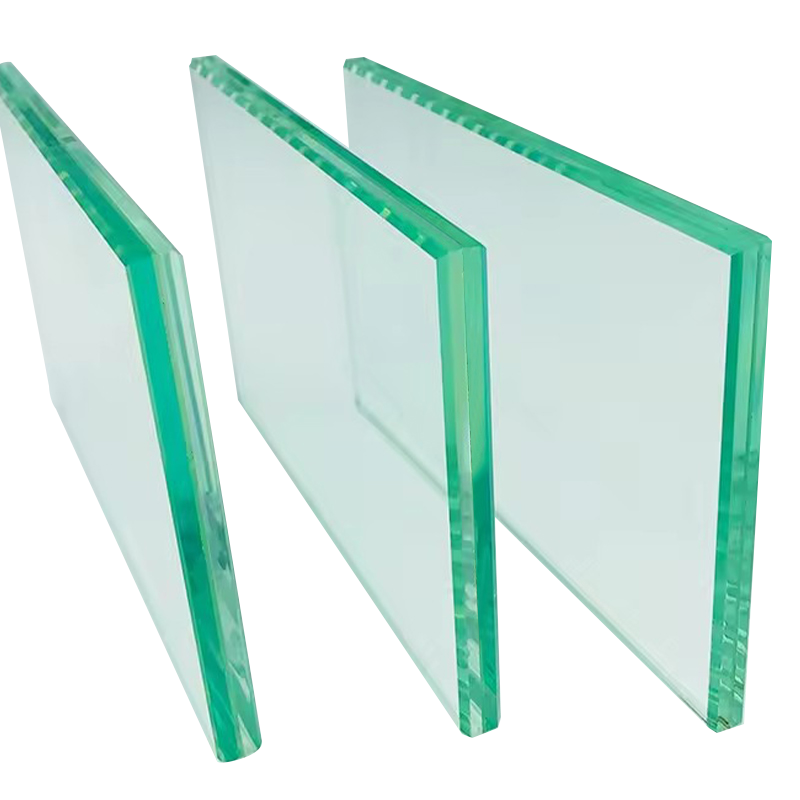
Annealed float glass, the standard window and shelf material, is easiest to cut because its internal stress is low and uniform. Crown optical glasses such as B270 are close cousins of float glass and also score and break predictably, which is why instrument windows and mirror blanks are made from them. Borosilicate glass is harder to snap cleanly; it is tougher and more resistant to thermal shock, so the score must be deeper and the break firmer. Laminated glass can be cut, but both panes need a score line and the plastic interlayer has to be sliced with a knife. Tempered glass cannot be cut at all after tempering; a deep score releases the internal stress and the sheet bursts into small fragments. The chart below summarises the practical differences using typical workshop difficulty values.
Cutting Optical Glass at Home
If your part is a flat window, a lens blank, or a hobby instrument component, the same cutters and the same six steps apply. B270, a soda-lime crown, cuts almost like float glass and transmits well in the visible range, so it is a common choice for DIY optical windows. K9/BK7 is harder and needs a sharper wheel, a lighter touch, and edge grinding before the part is usable in an optical path. Quartz glass belongs to another category entirely: it requires diamond tooling, and hand scoring is not practical. If the part is destined for an optical system, the tolerance requirements change; a short guide to the practical quality requirements for optical glass explains what to check.
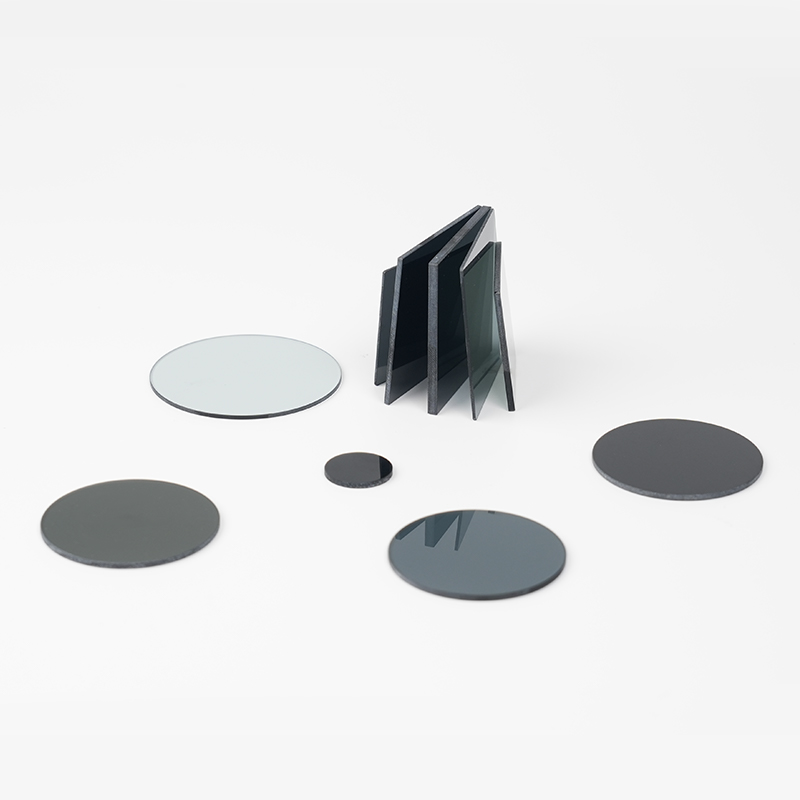
Once the part has an optical function — a laser window, a neutral density filter, or a UV cut-off filter — appearance stops mattering and geometry takes over. A hand-cracked edge is rarely straight to better than about ±0.5 mm over 300 mm, and it contains micro-chips that scatter light. An edge-ground optical component holds parallelism and dimensions to a much tighter tolerance, typically ±0.05 mm or better. For a 3 mm K9/BK7 window cut to 50 × 50 mm, a specialist grinds the edges, chamfers them, and inspects the surfaces before shipping.
Filter glass adds one more constraint. A neutral density filter must attenuate light evenly across its clear aperture; a chipped edge changes the effective aperture and can shift calibration. The same applies to cut-off filters that define spectral edges. Filter blanks should be scored and broken only when the edge will sit outside the optical path; otherwise the edges must be ground after cutting.
That is why manufacturers process optical glass rather than simply snapping it: CNC scribing, edge grinding, polishing, chamfering, and coating all happen after the blank is cut. If your drawing contains a tolerance callout, hand-cutting is no longer the right method.
When to Hand It Over to a Specialist
Hand methods stop being sensible in four situations:
Thick or laminated architectural glass, where a mistake wastes an expensive pane;
Tempered or bent glass, which cannot be scored at all after forming;
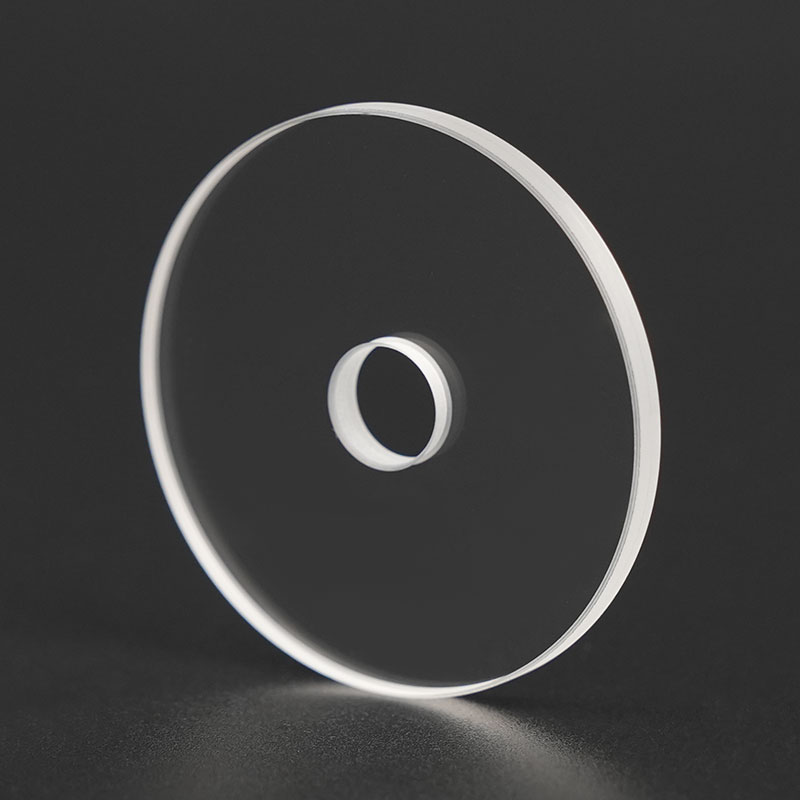
Parts with holes, notches, or non-straight outlines, which need diamond drilling or CNC shaping;
Any component with a specified edge quality or dimensional tolerance, especially if it will be placed in an optical beam.
For these jobs, a fabricator with the right equipment is cheaper than the ruined material. Nantong Xiangyang Optical Element, for example, has processed optical glass and filters since 1996 and regularly supplies cut-to-size B270, K9/BK7, quartz, and filter glass blanks with ground and polished edges. When your part carries a tolerance callout, it is faster to send a drawing to a glass specialist than to experiment with a hand cutter.
Frequently Asked Questions About Cutting Glass
Q1. Can tempered glass be cut?
No. Tempered glass is cooled under controlled stress, and any deep score releases that stress, causing the sheet to shatter into small fragments. Tempering is always done after cutting, so if the size cannot be changed, order a pane cut to size before it is tempered.
Q2. What is the best tool to cut glass?
A carbide-wheel glass cutter with a 135–160° wheel is the standard for straight lines. Use a circle cutter or a diamond burr for curves and holes; for flat straight cuts, a basic cutter and a straightedge give the cleanest score.
Q3. Can you cut glass without a glass cutter?
A carbide scriber, a hardened file edge, or even a fresh utility knife blade can scratch a usable score line in thin glass. Heated-string methods work on bottles and tubes, but for flat sheet glass a proper cutter wheel is far more reliable.
Q4. Can glass be cut with a Dremel?
A Dremel with a diamond bit grinds rather than scores. It is useful for holes, curves, and notches, but the resulting edge is rough and needs grinding and polishing. Straight cuts are cleaner and faster with a wheel cutter.
Q5. Why does my glass crack off the score line?
Usually because the score was too shallow, the pressure changed mid-pass, the wheel was dull, or the bending force was applied too far from the line. Keep the support within a few millimetres of the score and complete the score in one continuous pass.
Q6. Does cutting glass weaken it?
Every cut edge contains tiny fractures. Sanding and grinding the edge removes those fractures and significantly increases edge strength, which is why optical components always ship with ground and polished edges rather than raw snapped ones.




 English
 Español