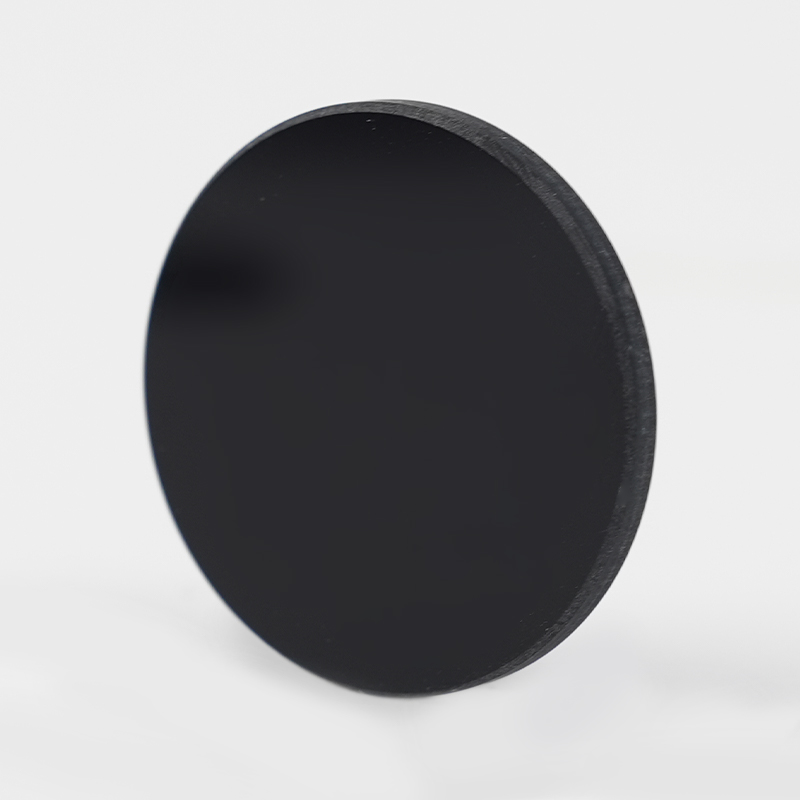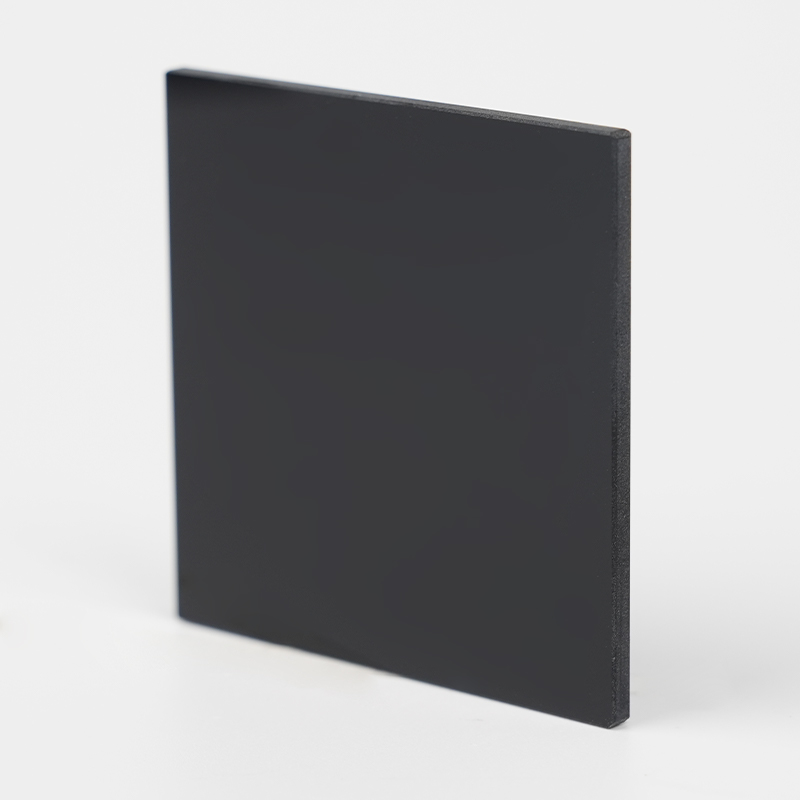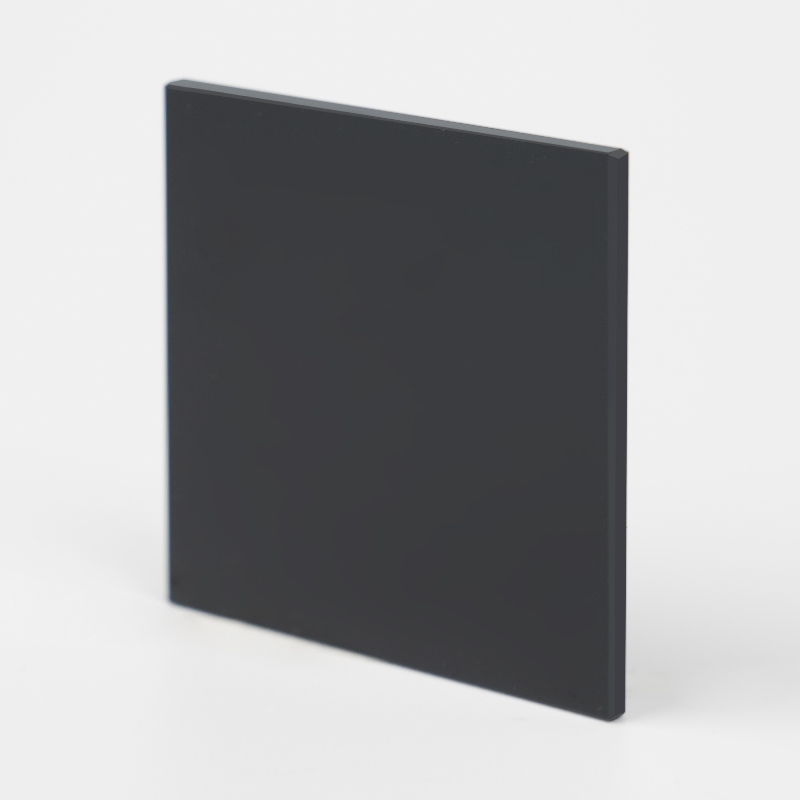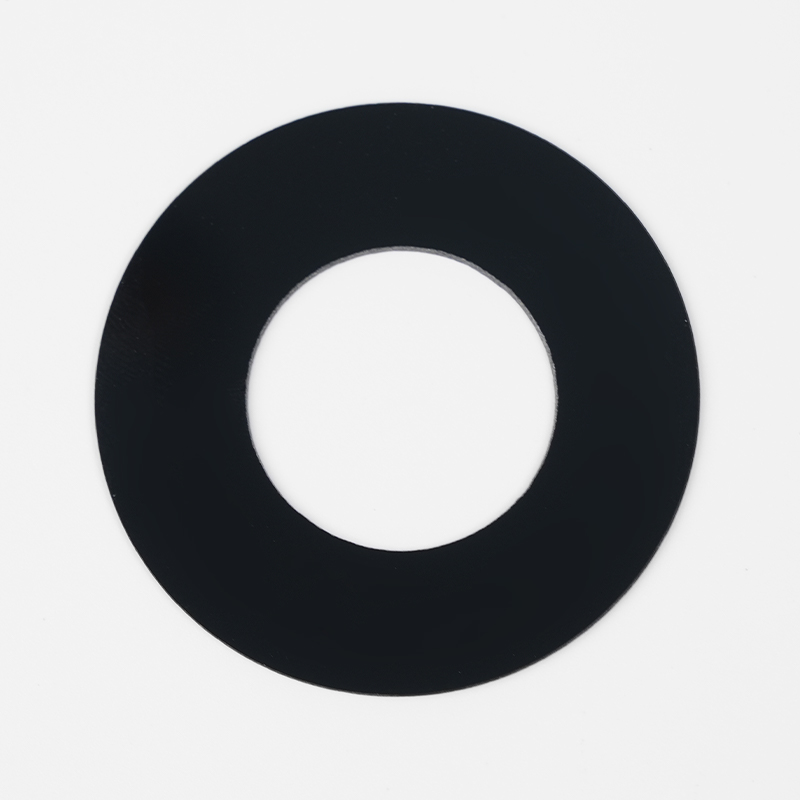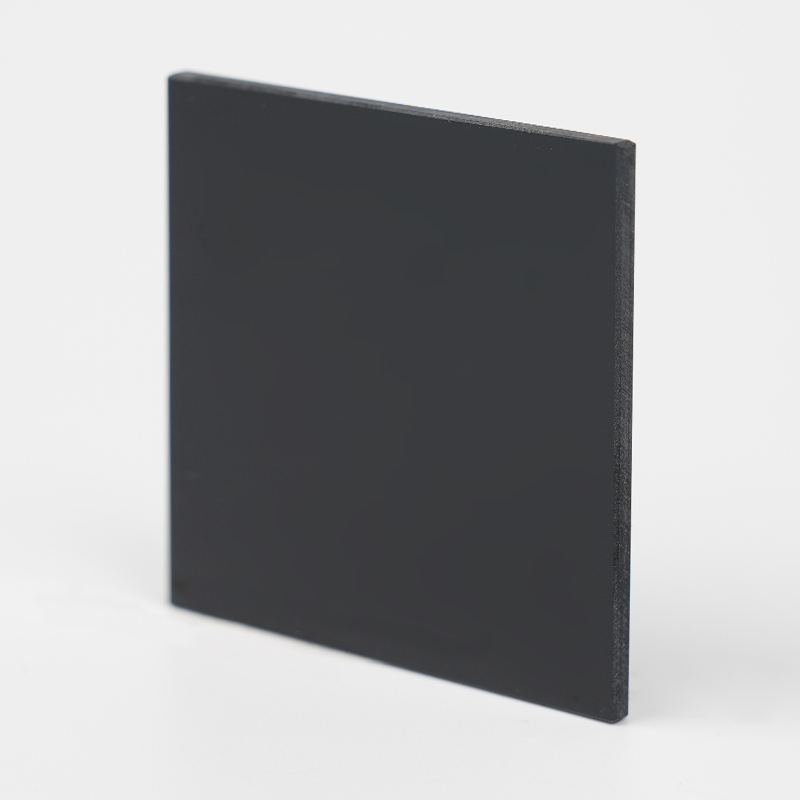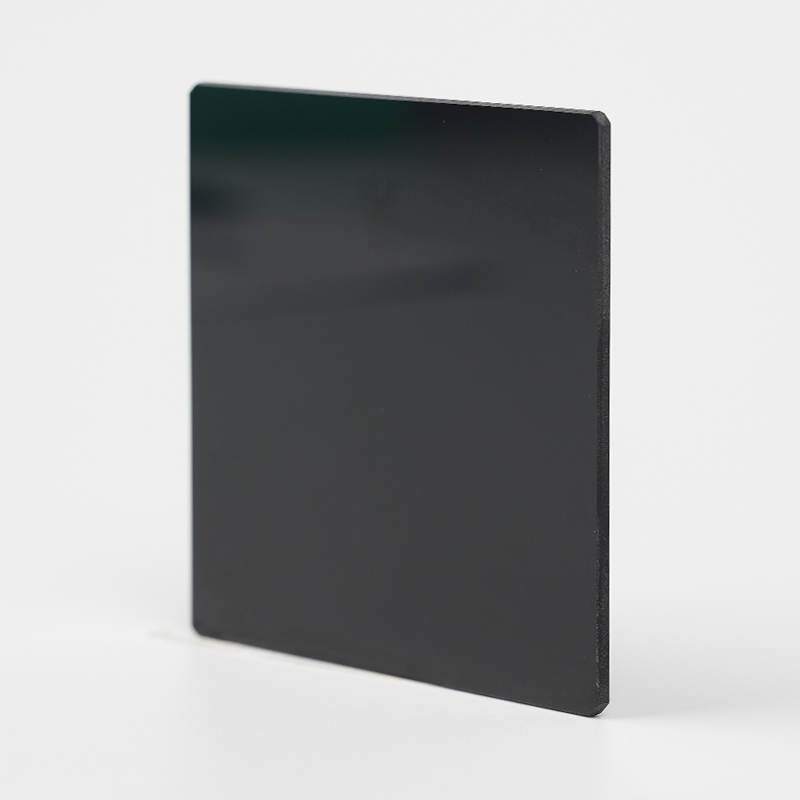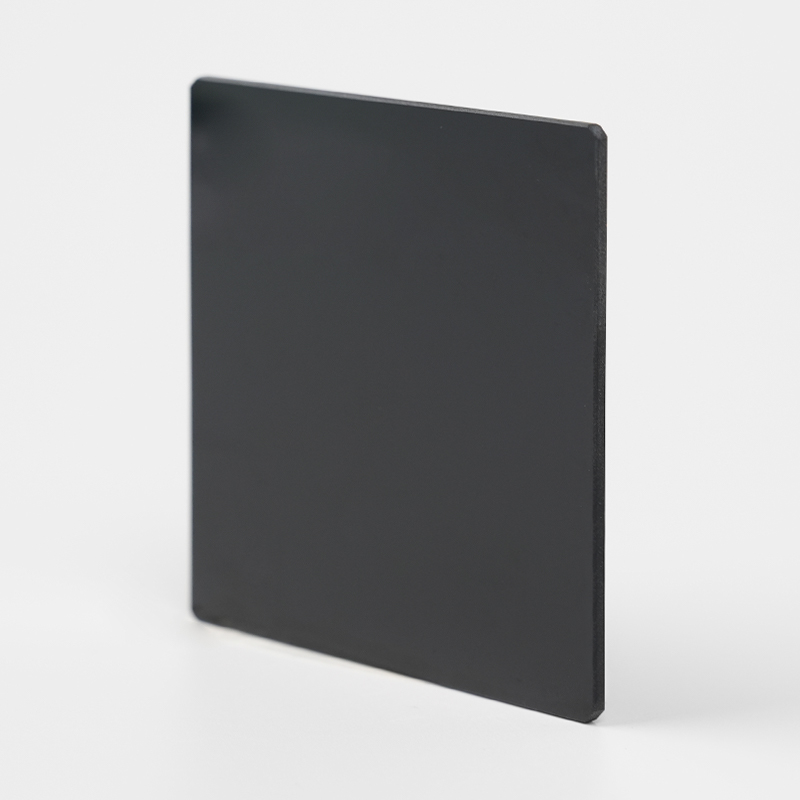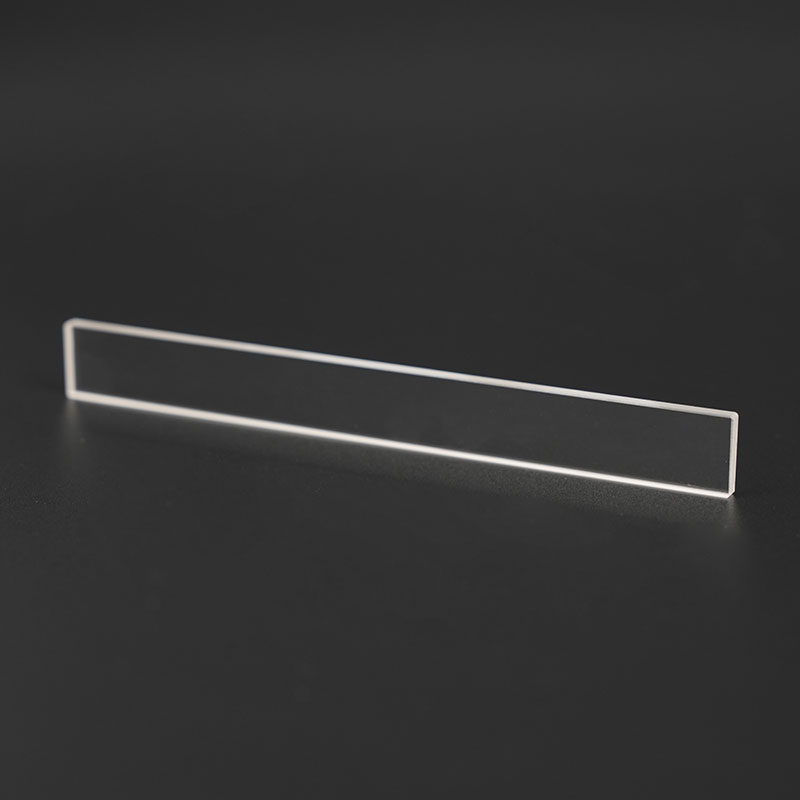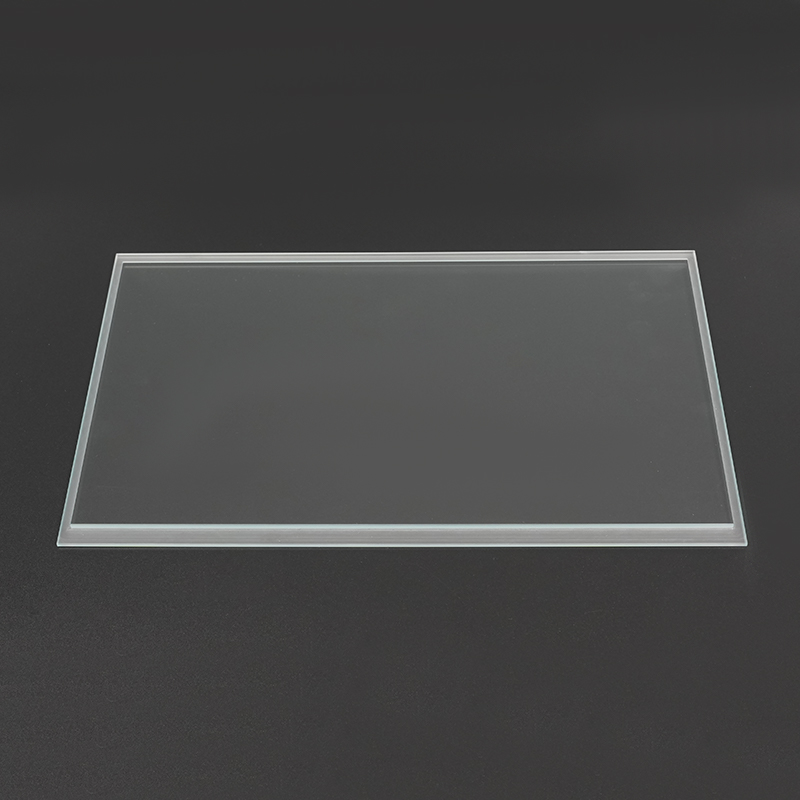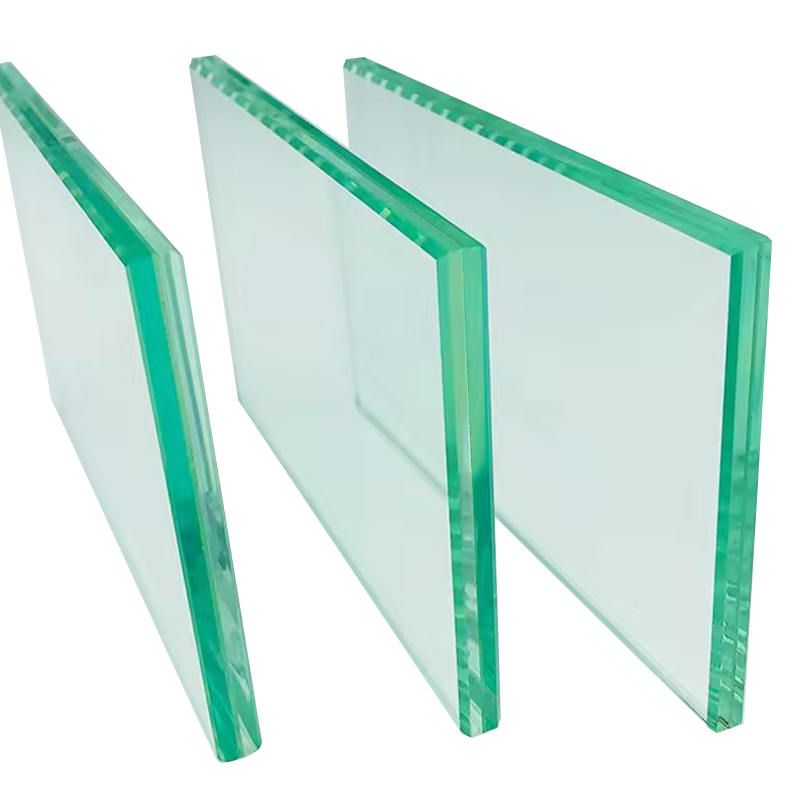

A UV cut-off glass filter is an optical material specifically designed to block ultraviolet (UV) lig...
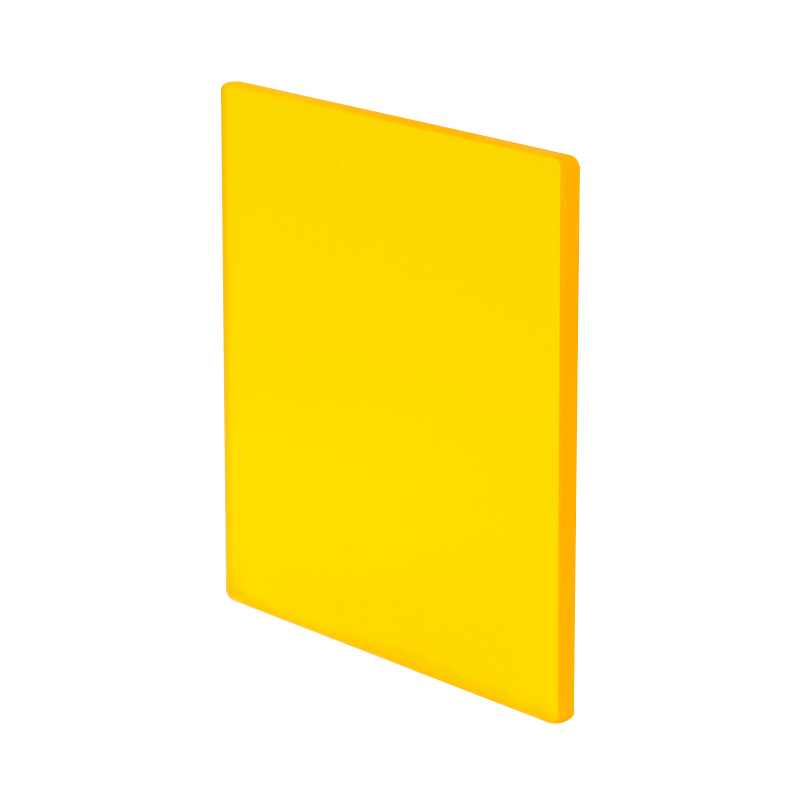
Infrared-transmitting absorbing glass is an optical material used to absorb infrared light while transmitting visible light. It effectively filters out light in the infrared wavelength range, preventing it from entering optical systems or environments, while allowing visible light to pass through. This enables various functions such as temperature control, spectral filtering, and energy management. Due to its unique optical properties, infrared-transmitting absorbing glass is widely used in several industries.
1. Features
| Number | Thickness(mm) | A[2856k] | D65 | Chemical stability | ND | α×10-7 (℃) |
Tg(℃) | TS(℃) | S | |||||
| x | y | Y | x | y | Y | DA | DW | |||||||
| HWB760 | 3 | 5 | 4 | 1.532 | 111 | 534 | 592 | 2.77 | ||||||
| HWB780 | 3 | 5 | 4 | 1.532 | 111 | 534 | 592 | 2.77 | ||||||
| HWB800 | 3 | 5 | 4 | 1.52 | 98 | 559 | 615 | 3.05 | ||||||
| HWB830 | 3 | 5 | 4 | 1.52 | 98 | 559 | 615 | 3.05 | ||||||
| HWB850 | 3 | 5 | 4 | 1.52 | 98 | 559 | 615 | 3.05 | ||||||
| HWB900 | 6 | 3 | 3 | 2.57 | ||||||||||
| HWB930 | 6 | 3 | 3 | 2.57 | ||||||||||
2. Technical requirements
| Number | Thickness(mm) | Atj(nm) | A0(nm) | TAO(%) | K |
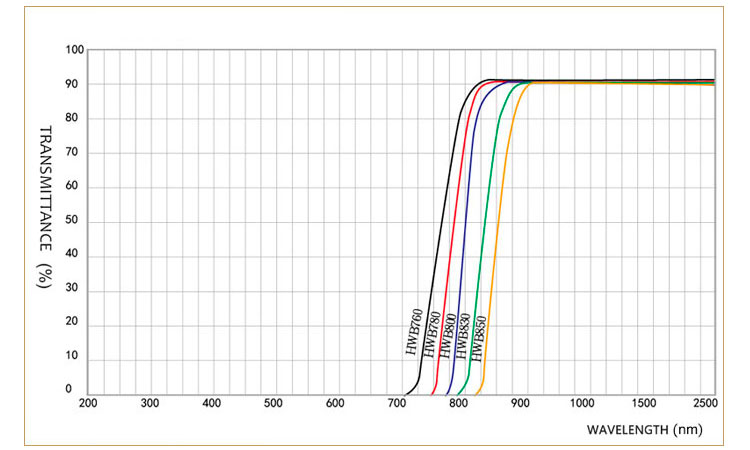
| HWB760 | 3 | 760±10 | 850 | ≥83.6 | ≥0.6 |
| HWB780 | 3 | 780±10 | 900 | ≥83.6 | ≥0.5 |
| HWB800 | 3 | 800±10 | 900 | ≥83.6 | ≥0.5 |
| HWB830 | 3 | 830±10 | 930 | ≥83.6 | ≥0.5 |
| HWB850 | 3 | 850±10 | 950 | ≥80 | ≥0.5 |
| HWB900 | 6 | 930±15 | 1050 | ≥80 | ≥0.2 |
| HWB930 | 6 | 930±15 | 1050 | ≥80 | ≥0.2 |
3. Bubble, fringe and stress levels
| Number | Bubble | Stripes | Stress |
| HWB760 | C-B | 3C | 3 |
| HVB780 | C-B | 3C | 3 |
| HWB800 | C-B | 3C | 3 |
| HWB830 | C-B | 3C | 3 |
| HWB850 | C-B | 4 | 3 |
| HWB900 | C | 3C | 3 |
| HWB930 | C | 3C | 3 |
4. The spectra

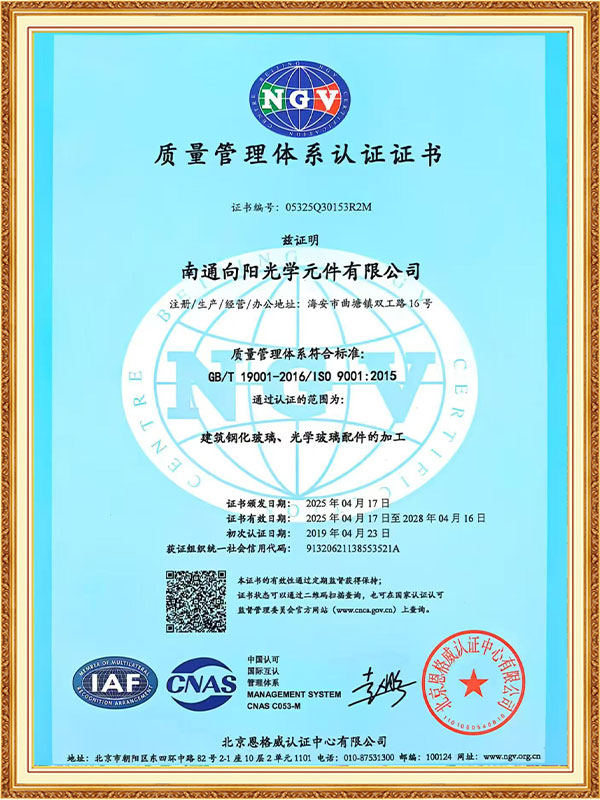
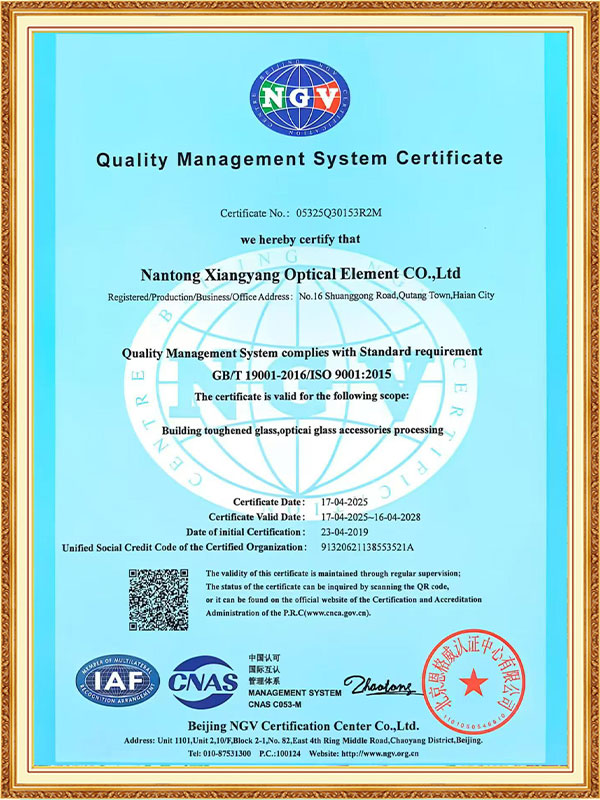
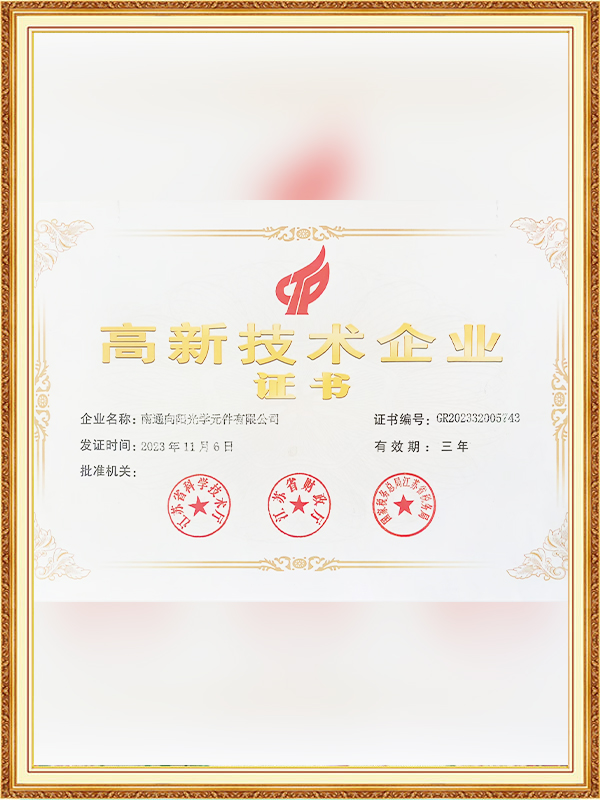
As a leading manufacturer in the Yangtze River Delta Integrated Demonstration Zone (Jiashan, Zhejiang), Jiangnan Outdoor has been awarded "National High-Tech Enterprise" and "Jiaxing Green Factory" titles, with full certifications in ISO 9001:2015, ISO 14001:2015, and ISO 45001:2018 international standards.
Choosing the right cut-off glass filter comes down to three factors: your target wavelength range, the optical precision your application demands, and the environmental conditions the filter must wit...
READ MOREScreen-printed glass panels can be installed in most elevators, but not unconditionally — compatibility depends on the elevator's structural framing system, cab wall configuration, available panel di...
READ MOREYes — selective absorption glass filters can block UV light, and many are specifically engineered to do so with high efficiency. The UV-blocking capability of a selective absorption filter depends on...
READ MORESelective absorption glass filters are critical for UV protection because they block specific wavelength bands — particularly the 200–400 nm ultraviolet range — while transmitting the visible or infr...
READ MORE